
Last updated November 17, 2026
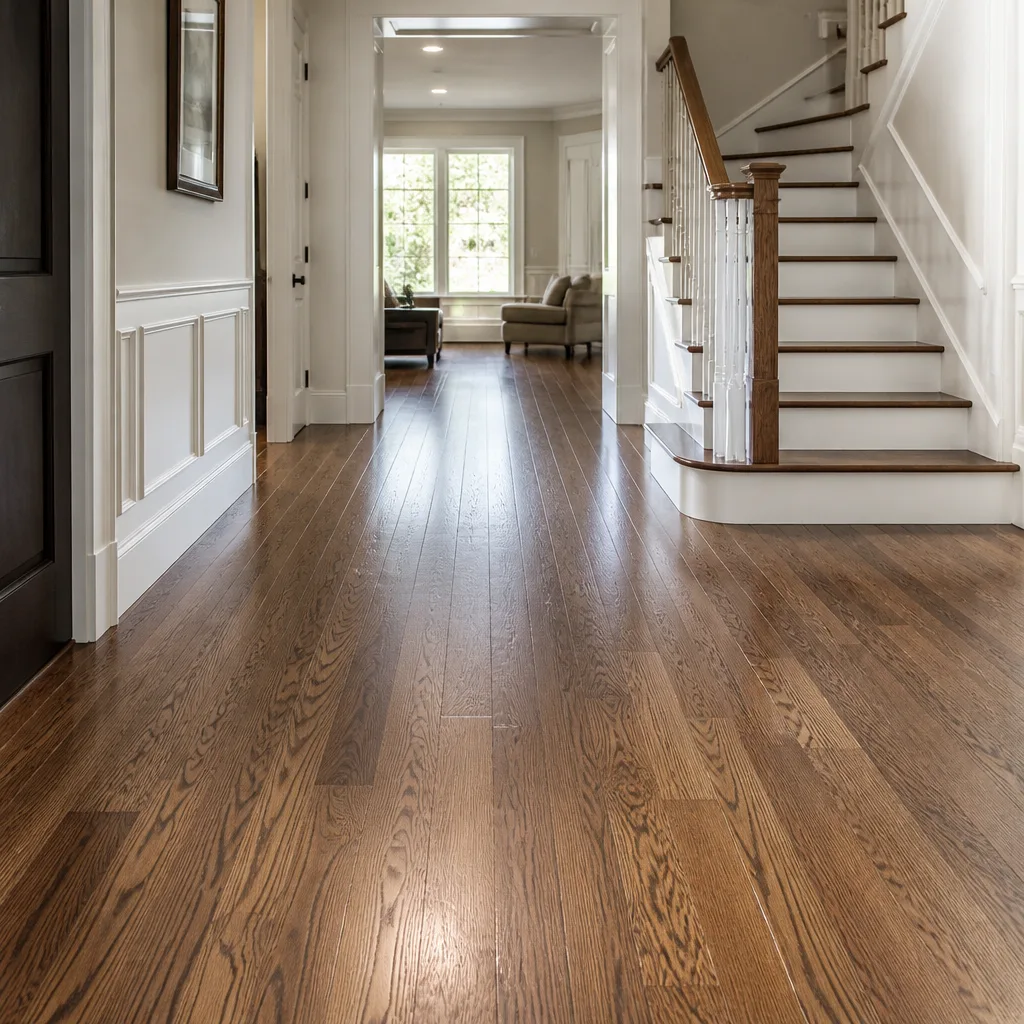 Hardwood
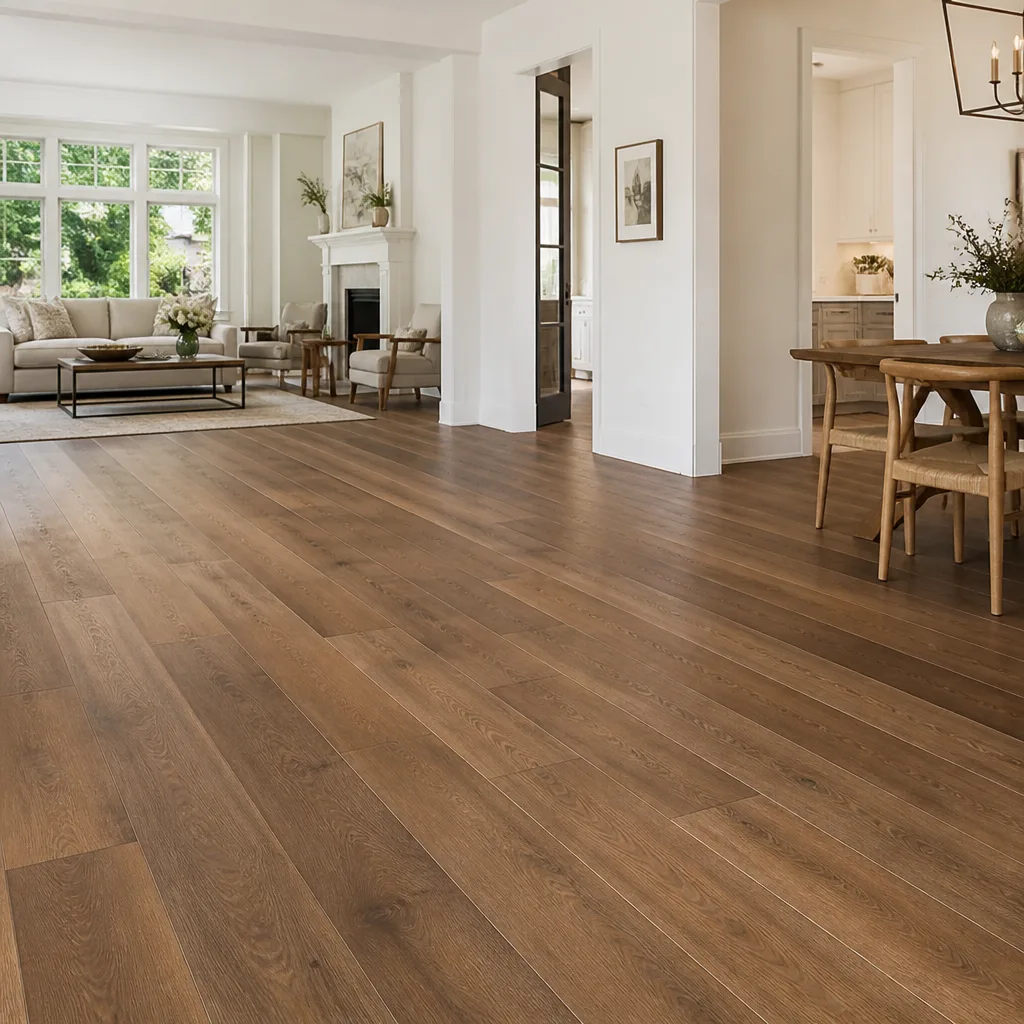 Engineered hardwood
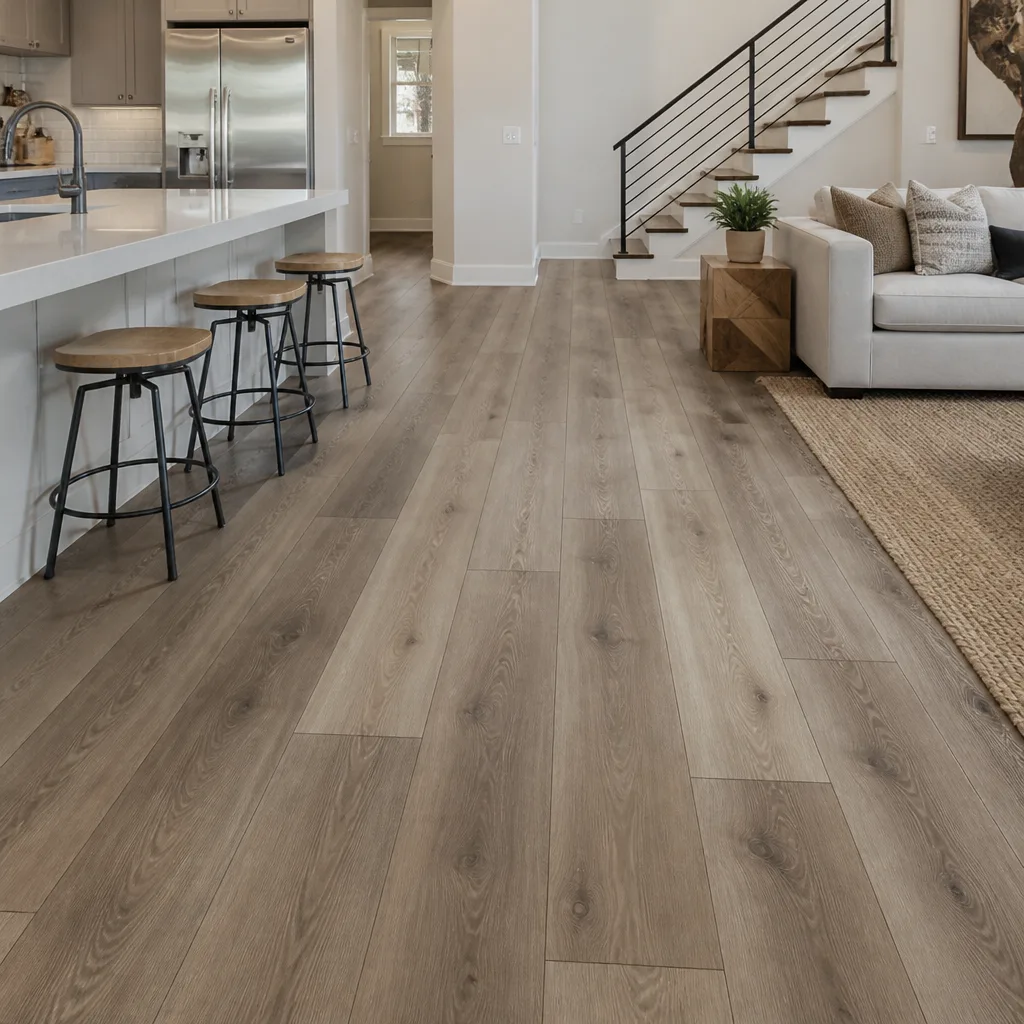 Luxury vinyl plank
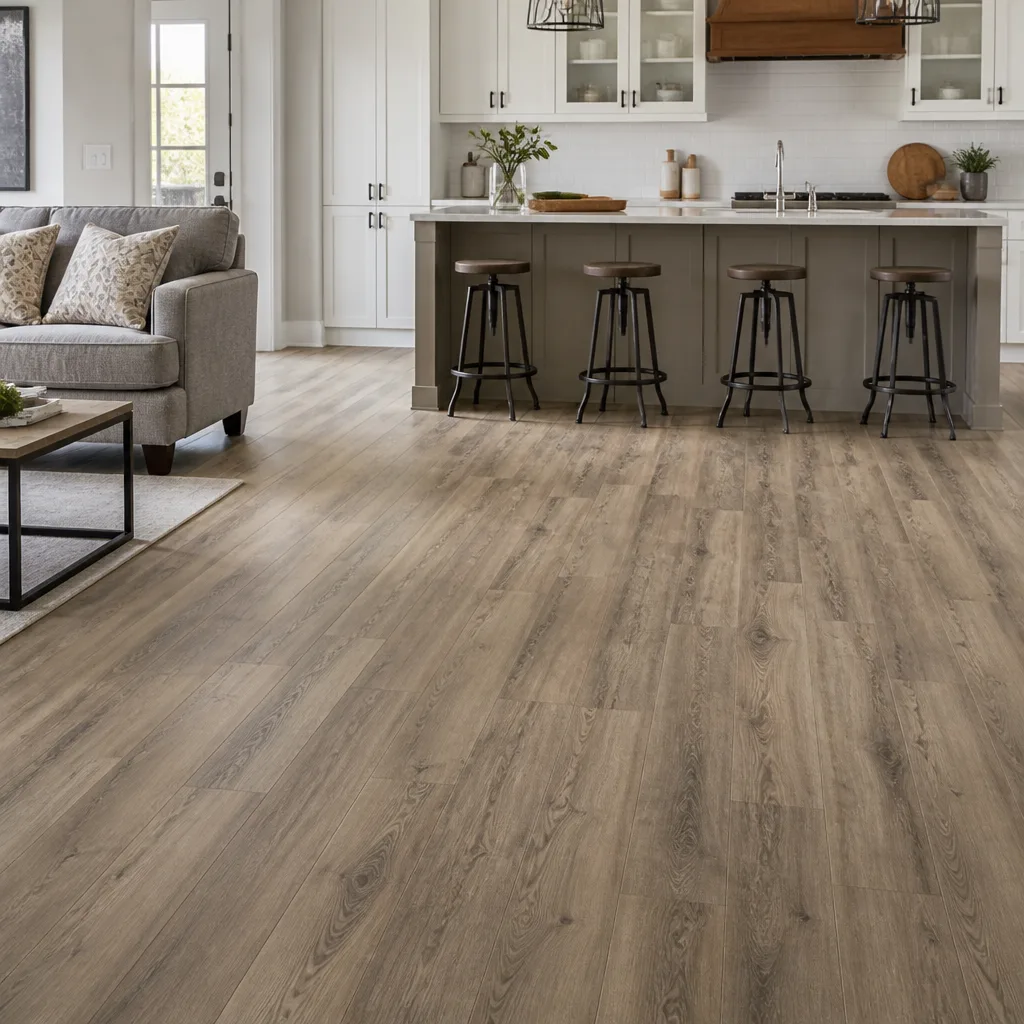 Laminate
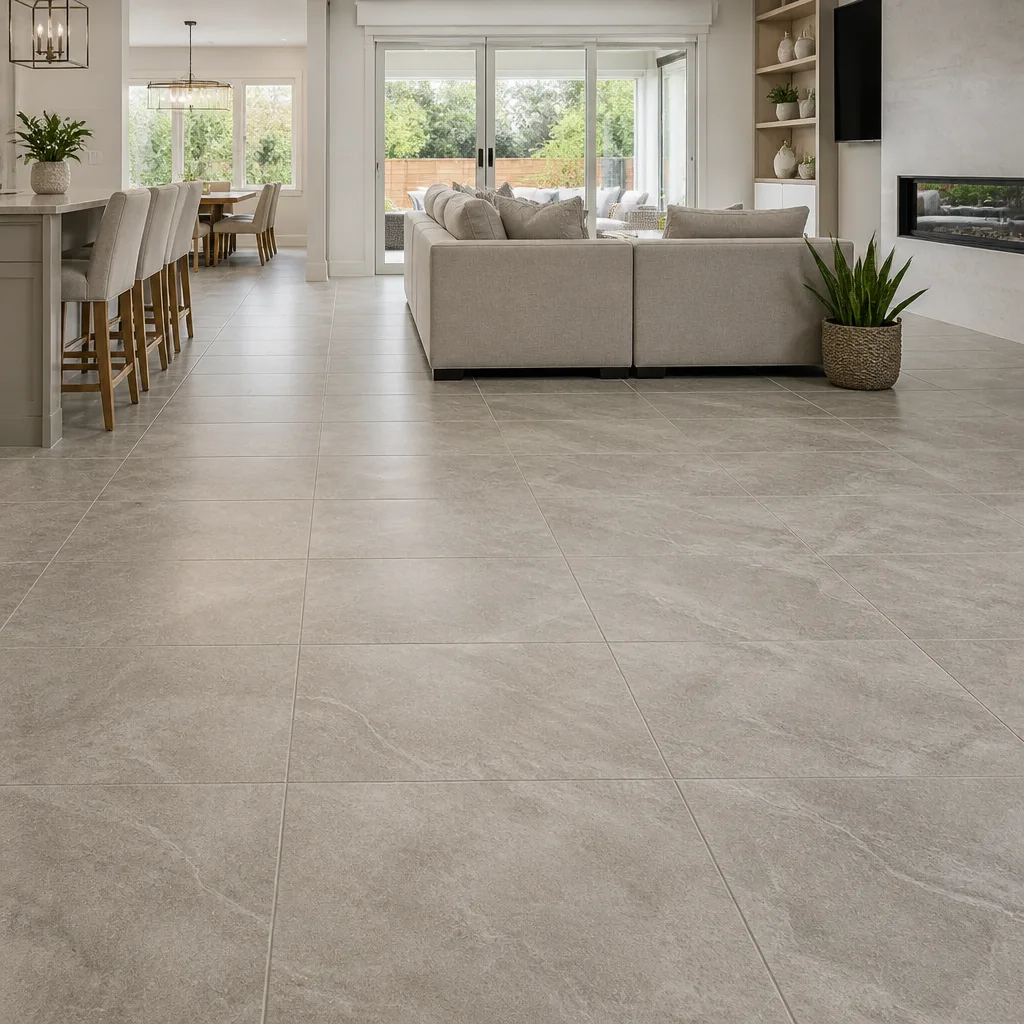 Porcelain tile
 Carpet
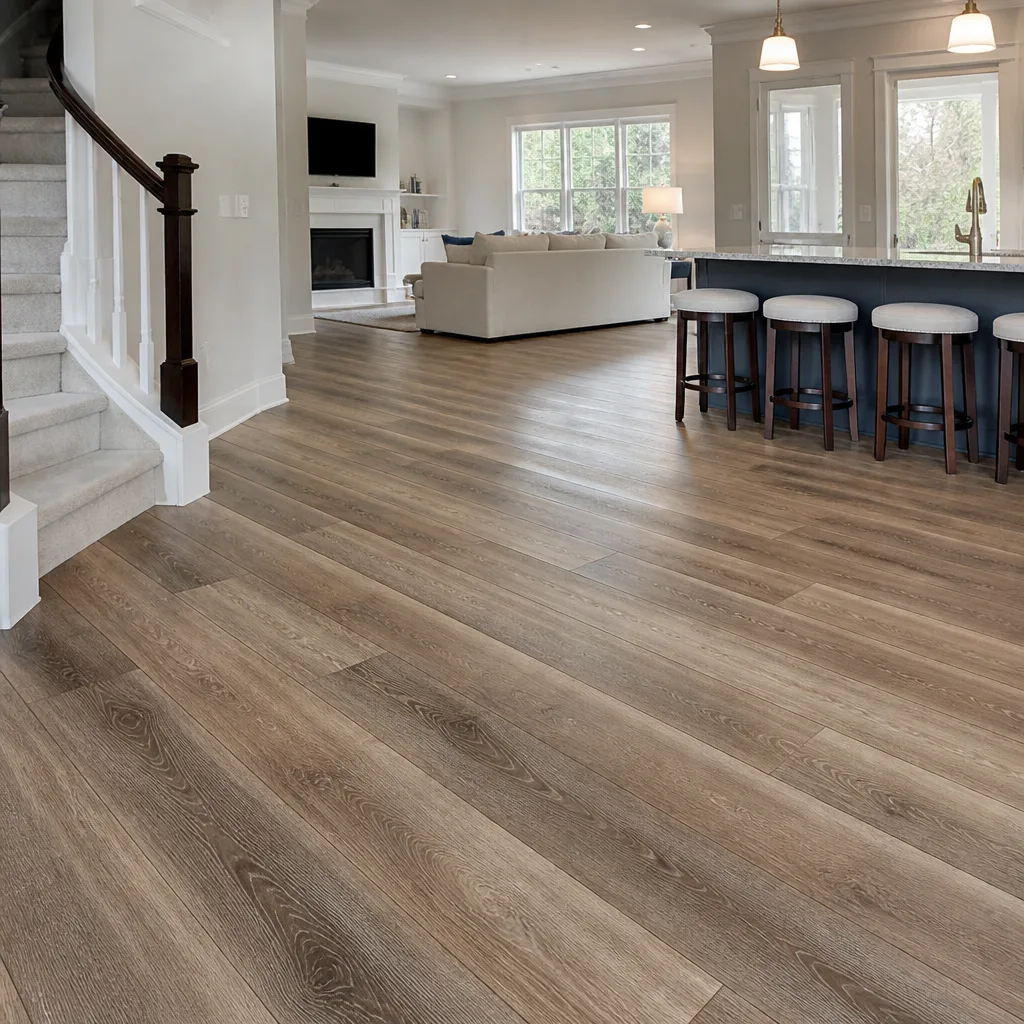 Shaw
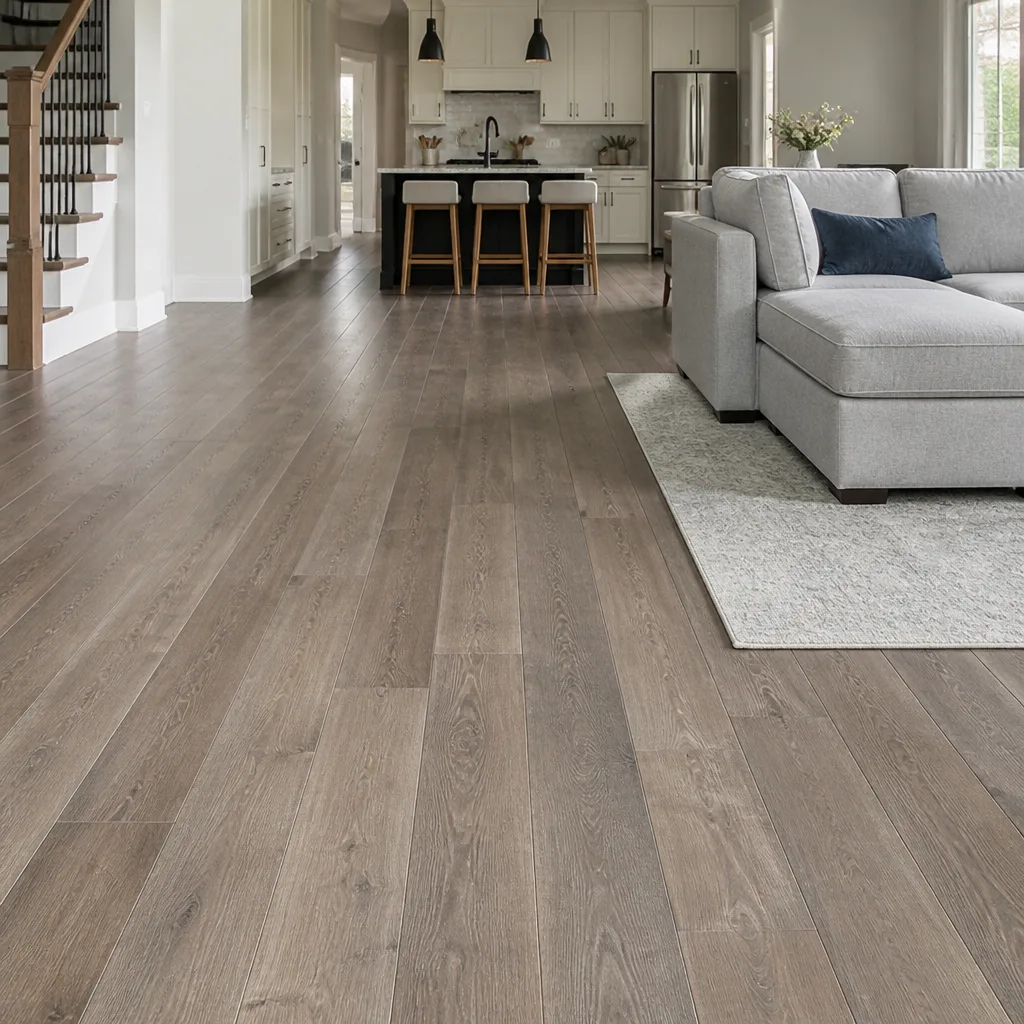 Mohawk
 COREtec
 Pergo
Free in-home measure and written estimate: Shaw, Mohawk, COREtec and Pergo lines compared on your own rooms, with carpet, tile, vinyl plank, laminate and hardwood laid out side by side
Get your free estimateHow to Care for New Flooring: Hardwood, Vinyl, Laminate, Tile and Carpet
The leading cause of finish failure on Mesquite hardwood floors usually isn’t foot traffic. It’s the dry mop. Desert dust here carries alkaline minerals, and when you drag a dry mop across a finished floor, you’re not cleaning it, you’re sanding it. That scratchy grit gets pushed back and forth under the pad, and over a couple of seasons the sheen wears thin in the traffic lanes. This guide is built around how homes in Mesquite actually age: alkaline dust, intense UV through south and west windows, dry air that opens gaps in wood, and the moisture swings that come with an evaporative cooler. We’ll walk through care routines for each floor category, the products that quietly damage them, and the seasonal tasks that keep a new floor looking new.
Quick Answer
Care for new flooring by matching the routine to the material and to Mesquite’s climate, not to generic instructions written for damp places. That means damp-mopping with a pH-neutral cleaner instead of dry-dusting (so alkaline dust doesn’t grind the finish), running a humidifier in dry months to keep wood from gapping, blocking UV at south and west windows, and never using vinegar, bleach, or oil-based polishes on vinyl plank. Sweep or vacuum regularly, clean spills promptly, and schedule one deeper seasonal task per material.
Styles & brands we work with
- Hardwood
- Engineered hardwood
- Luxury vinyl plank
- Laminate
- Porcelain tile
- Carpet
- Shaw
- Mohawk
- COREtec
- Pergo
Table of Contents
- Why Desert Dust Changes the Care Routine
- Humidity and UV: The Mesquite Factors Nobody Warns You About
- Caring for Hardwood (and Refinishing as an Option)
- Caring for Luxury Vinyl Plank
- Caring for Laminate
- Caring for Porcelain and Ceramic Tile
- Caring for Carpet
- Seasonal and Annual Maintenance Calendar
- Common Mistakes to Avoid
- When to Call a Professional
Why Desert Dust Changes the Care Routine
Mesquite sits in a high-desert valley, and the dust that settles on floors here is different from the dust in a temperate city. It’s fine, it’s mineral-rich, and it’s often alkaline. Picture the fine grit that lands on a patio after a windy afternoon and drifts inside every time a door opens. On a hard surface, that grit behaves like a very fine abrasive.
Here’s the problem with the instinct most people have: dry-mopping or using a microfiber dust mop on a dry floor feels productive, and it does pick up visible debris, but it also drags mineral grit across the surface. On hardwood, that slowly dulls the finish. On luxury vinyl plank, it scuffs the wear layer. On tile, it packs into grout lines and darkens them over time.
What actually works in a Mesquite home:
- Sweep first, then damp-clean. Use a soft broom or a vacuum with a hard-floor attachment to lift loose grit, then follow with a damp (not wet) mop using a pH-neutral floor cleaner. The damp pass lifts the alkaline residue instead of grinding it.
- Pick up grit at the doors. A textured mat at every exterior door traps a surprising amount of dust before it reaches the floor.
- Clean more often, not harder. A quick damp pass a couple of times a week beats a heavy scrub once a month. The goal is to remove grit before it becomes an abrasive.
One small distinction that matters: “damp” means the mop head is wrung out so it feels barely cool to the touch, not dripping. Standing water is the enemy of wood, laminate, and vinyl seams alike, and it’s the fastest way to turn a good cleaning habit into a repair bill.
Humidity and UV: The Mesquite Factors Nobody Warns You About
Two forces shape how flooring ages in Mesquite: very low indoor humidity in the dry season and relentless sun through south- and west-facing windows. Both are seasonal, both are manageable, and both catch people off guard because most care guides assume a humid climate.
The humidity problem
Indoor relative humidity in a desert home can drop into the teens and twenties during the dry months, especially with the heat running. Wood and laminate are hygroscopic, meaning they take on and give off moisture with the air around them. When indoor air gets very dry, wood planks can shrink slightly and open hairline gaps at the seams. Laminate behaves similarly at its edges. These gaps aren’t a defect; they’re the material responding to its environment.
What helps:
- Run a humidifier in dry months. Aim for a moderate indoor humidity level and let a hygrometer tell you where you are. Don’t overdo it; you’re balancing the wood, not soaking the room.
- Watch the swings. The bigger issue in Mesquite is often the gap between a very dry heated interior and a sudden moisture event, like a cooler being switched on or a plumbing drip. Steady beats dramatic.
- Never wet-mop wood or laminate. A damp mop is fine; a soaked one drives water into seams and can cause swelling at the edges.
The UV problem
Mesquite gets intense sun, and it comes through glass. UV exposure fades and bleaches flooring differently by category. Hardwood can lighten or shift tone in sun-struck areas, and the contrast with shaded areas becomes visible over time. Luxury vinyl plank and laminate can fade or yellow slightly under long UV exposure. Carpet dye can bleach in a bright patch by a slider. Tile itself is generally colorfast, though grout can discolor.
What helps:
- Use window coverings on south and west exposures. Sheers, UV-filtering film, or simply closing blinds during the strongest afternoon sun slows fading considerably.
- Rearrange rugs and furniture occasionally. Rotating area rugs and shifting furniture lets sun-struck areas even out.
- Choose wisely at the estimate. If a room gets hammered by afternoon sun, that’s worth mentioning when you pick a product and a finish; it’s part of the conversation, not an afterthought.
This is the kind of local knowledge that a big-box aisle can’t give you. When you’re ready to talk through material choices for a sun-heavy room, our team at Flooring Mesquite can walk you through the options that hold up in desert light.
Caring for Hardwood (and Refinishing as an Option)
Hardwood is the floor most affected by Mesquite’s climate, and it’s also the floor with the most upside, because a solid or thick engineered wood floor can often be refinished rather than replaced. Care breaks down into daily habits and a realistic view of when a floor needs more than cleaning.
Daily and weekly hardwood care
- Sweep or vacuum daily in high-traffic areas. Kitchens, entries, and hallways collect grit fast. Use a hard-floor vacuum attachment or a soft broom.
- Damp-mop with a pH-neutral wood floor cleaner. Wring the mop nearly dry. Never use vinegar, ammonia, or oil-based “polish” products on a finished floor; vinegar is acidic and dulls the finish, and oil-based products can build up and trap grit.
- Wipe spills promptly. Blot, don’t rub, and dry the area fully. Water sitting on a seam is the main way hardwood edges get damaged.
- Keep felt pads under furniture legs and lift, don’t drag, heavy items.
- Manage humidity as described above, especially in dry months.
When refinishing makes sense
Refinishing is the restore-the-floor-you-have option, and it’s a dedicated service we offer as an alternative to replacement. It sands off the worn finish and a thin layer of the surface, then applies a new finish. The question is whether your particular floor has enough thickness left to sand. That depends on the wood’s thickness, its condition, and how many times it’s been sanded before, and it’s something to have checked at an estimate visit rather than guessed at. Not every floor can be refinished. If yours can, refinishing can be a smarter move than tearing out a floor you already like. Many homeowners exploring this route also compare it against carpet installation for bedrooms and other soft-surface rooms, since a whole-home refresh often mixes materials.
Caring for Luxury Vinyl Plank
Luxury vinyl plank is popular for good reason: it’s water-resistant, it handles the daily grind, and premium lines like COREtec and Karndean bring serious design flexibility. But “water-resistant” is not “indestructible,” and a few common habits shorten its life.
What LVP likes:
- Sweep or vacuum regularly. Desert grit is LVP’s main enemy; it scuffs the wear layer when dragged around.
- Damp-mop with a pH-neutral vinyl floor cleaner. Again, wring it out.
- Use felt pads and floor-protecting casters under furniture.
- Clean up standing water. LVP resists moisture from the surface, but prolonged standing water and moisture wicking up from below still have to be dealt with. A spill near a slider during a rare rain event, or a slow leak under a sink, needs prompt attention.
What damages LVP (this is where most people slip up):
- Vinegar, bleach, and ammonia-based cleaners. These can chemically dull or damage the wear layer and remove the manufacturer’s finish over time. They feel like cheap, effective cleaners, and they’re the wrong tool here.
- Abrasive scrub pads. A green scouring pad will scratch the wear layer.
- Steam mops. Heat and moisture forced into seams is exactly what LVP doesn’t want.
If your home has COREtec or Karndean plank, follow the care instructions that come with your specific product; those set the final word, and your written estimate will spell out the product details. Shaw and Mohawk both have vinyl lines as well, so if you’re still choosing, the brand conversation is worth having before installation, not after. Our Mesquite team can help you match a plank to the room it’s going in.
Caring for Laminate
Laminate is a layered product with a photographic wear surface bonded to a core, and it behaves a bit like wood and a bit like vinyl. It’s durable and budget-friendly, and brands like Pergo have made it a mainstream choice. The care routine is close to LVP with a couple of important differences.
- Sweep or vacuum daily in traffic lanes. A hard-floor vacuum head is ideal.
- Use a damp mop and a laminate-safe cleaner. Wring it out well. Laminate’s seams are the vulnerable spot, so you don’t want water pooling along them.
- Never wet-mop or steam-mop. Moisture that gets into the core can cause swelling and edge lifting, and that’s usually not reversible.
- Wipe spills immediately. Especially in kitchens and near exterior doors.
- Manage dry-season humidity so seams don’t open as the air dries out.
One note on laminate and dry air: the same low indoor humidity that opens hardwood seams can open laminate seams, and once debris works into a gap, it can be stubborn. Keeping indoor humidity in a reasonable range helps both materials. If you’re weighing laminate against plank, that’s a fair question to bring to an estimate; the decision often comes down to how a given room gets used and how much moisture it sees, not just which product looks nicer in the sample.
Caring for Porcelain and Ceramic Tile
Tile is the most forgiving floor in the house, and it’s also the one where people neglect the part that actually ages: the grout. Porcelain and ceramic surfaces will outlast almost any finish, but grout is porous and desert dust loves to settle into it.
Tile surface care
- Sweep or vacuum regularly. Grit on tile isn’t a big threat to the tile itself, but it does get pushed into grout lines.
- Damp-mop with a pH-neutral cleaner. A mild cleaner handles daily soil.
- Use a tile-safe scrub brush for textured tile. Avoid steel wool and metal scrapers, which can leave marks.
- Blot stains on natural stone and check the product instructions; stone is its own routine and shouldn’t get the same acids you might use elsewhere.
Grout care (the part that matters)
In a Mesquite home, grout lines darken faster than in a humid climate because fine alkaline dust piles into them and then gets damp-mopped in place. A couple of habits help:
- Scrub grout lines periodically with a soft brush and a pH-neutral cleaner; better a gentle routine than a harsh acid scrub.
- Seal grout if your product calls for it, and follow the product instructions on timing and reapplication; the manufacturer’s guidance and your written estimate are the authority here.
- Dry tile after mopping in kitchens and bathrooms to avoid leaving moisture in the grout.
If you’re planning tile in a bathroom or kitchen, Daltile is one of our tile-specific brand partners, and our tile flooring installation page covers how we handle a project from selection to finished floor. For care, the short version: stay gentle on the surface, stay diligent on the grout, and never let a puddle sit.
Caring for Carpet
Carpet is the quiet floor, and it’s often the one that collects the most dust in a dry climate. That’s not a problem if you vacuum with intent. It’s a problem when a carpet gets a weekly once-over and a pile of grit settles to the base of the fibers.
Weekly carpet routine
- Vacuum high-traffic areas twice a week. Go slowly and overlap your passes; the slower you go, the more grit the machine lifts.
- Vacuum doorways and closet entries where dust enters and settles.
- Blot spills, don’t rub. Work from the outside of the stain inward. Check any spot cleaner on a hidden area first, and use the product instructions.
- Keep entry mats in place to catch grit before it reaches the carpet.
- Rotate heavy furniture occasionally so pile crushing in one area doesn’t get permanent. Furniture glides or a sheet of plastic under heavy pieces help too.
Deeper carpet care
Over time, carpet benefits from a deeper clean, but timing and products depend on the fiber, the pile, and the manufacturer’s guidance for your specific product. Our carpet installation team is happy to point you toward the care guidance for Shaw and Mohawk carpet lines if you’re choosing a new one. One caution: avoid over-wetting carpet in a desert home. Damp carpet that can’t dry quickly can become a problem, so keep spot treatments light and let air circulate.
Seasonal and Annual Maintenance Calendar
A flooring routine that’s tied to the seasons in Mesquite does more for a floor than any single deep clean. Here’s a practical calendar by material.
Hardwood and laminate
- Dry season (heat on): Run a humidifier to keep indoor humidity moderate; check seams for hairline gaps opening and note whether they close as the season eases; keep the daily damp-mop routine going.
- Spring: Inspect the finish in traffic lanes for dull patches; check furniture pads and replace worn ones; rearrange rugs to even out sun exposure.
- Mid-year: Review sun-struck areas for fade or color shift; consider UV film or sheers on south and west windows.
- Fall: Do a deep clean with the material-appropriate cleaner; inspect door thresholds for drafts that carry dust.
- Annual: Have a wood floor assessed for refinishing if the finish is worn through in traffic areas; that’s the moment to ask whether refinishing is viable for your particular floor.
Luxury vinyl plank and ceramic/porcelain tile
- Weekly: Sweep and damp-mop; pay attention to grit at entryways.
- Monthly: Scrub grout lines on tile (or spot check for darkening); inspect LVP seams for edge lifting or grit trapped in joints.
- Seasonally: Check floor protectors under furniture; review cleaning products and confirm they’re pH-neutral and safe for the wear layer.
- Annually: Give tile grout a deeper clean if your routine calls for it; if you’re considering replacing tile in a heavily trafficked room, compare materials with the installer.
Carpet
- Weekly: Vacuum high-traffic areas twice; spot-clean spills promptly.
- Monthly: Check entry mats; give hidden corners a vacuum pass.
- Seasonally: Rotate heavy furniture or use glides; assess whether the carpet needs a deeper clean based on how it’s holding up.
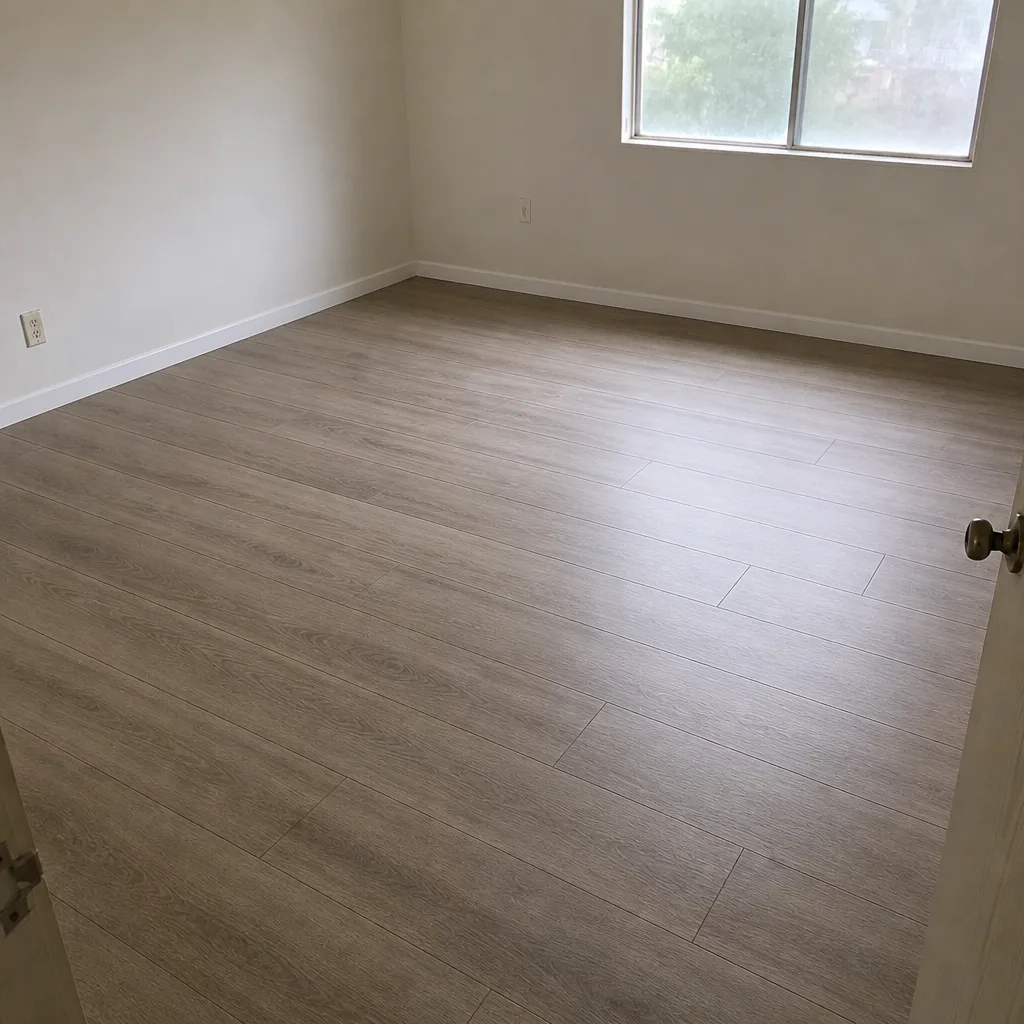
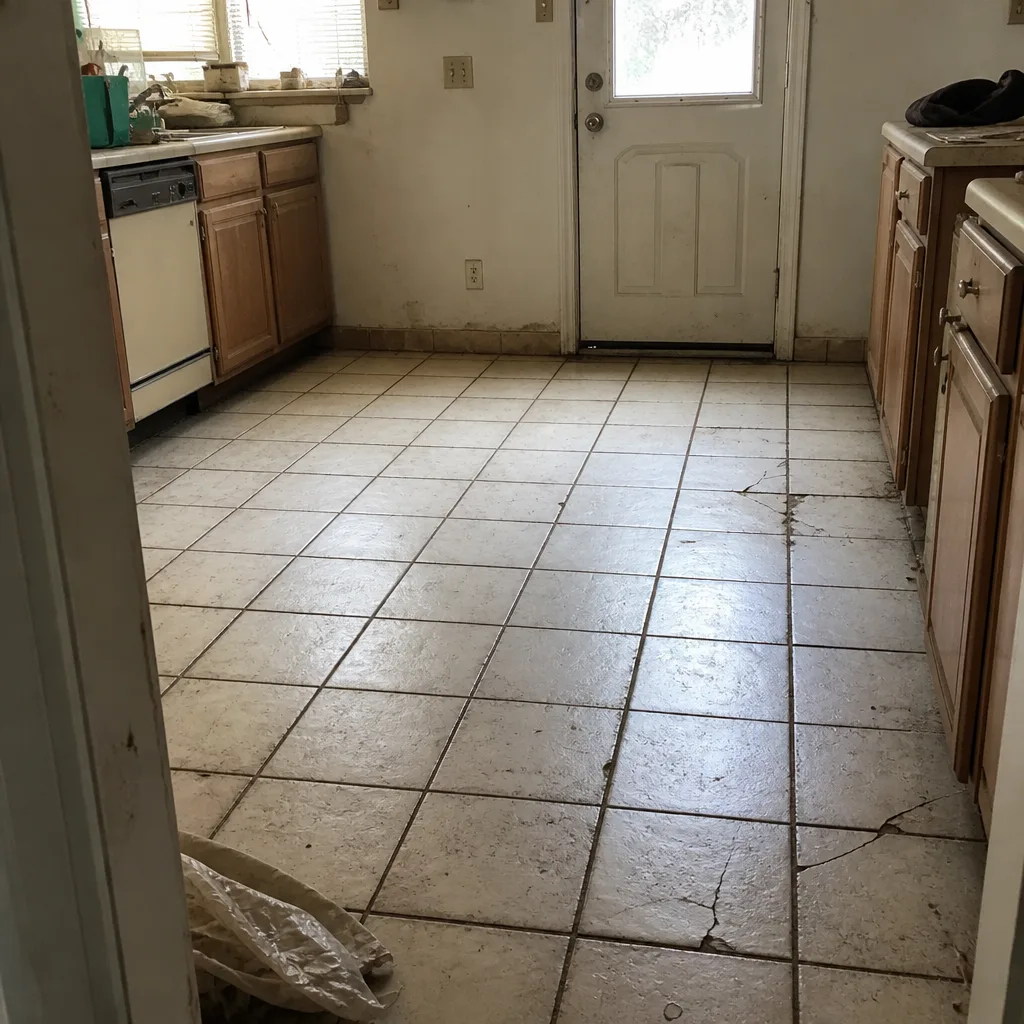
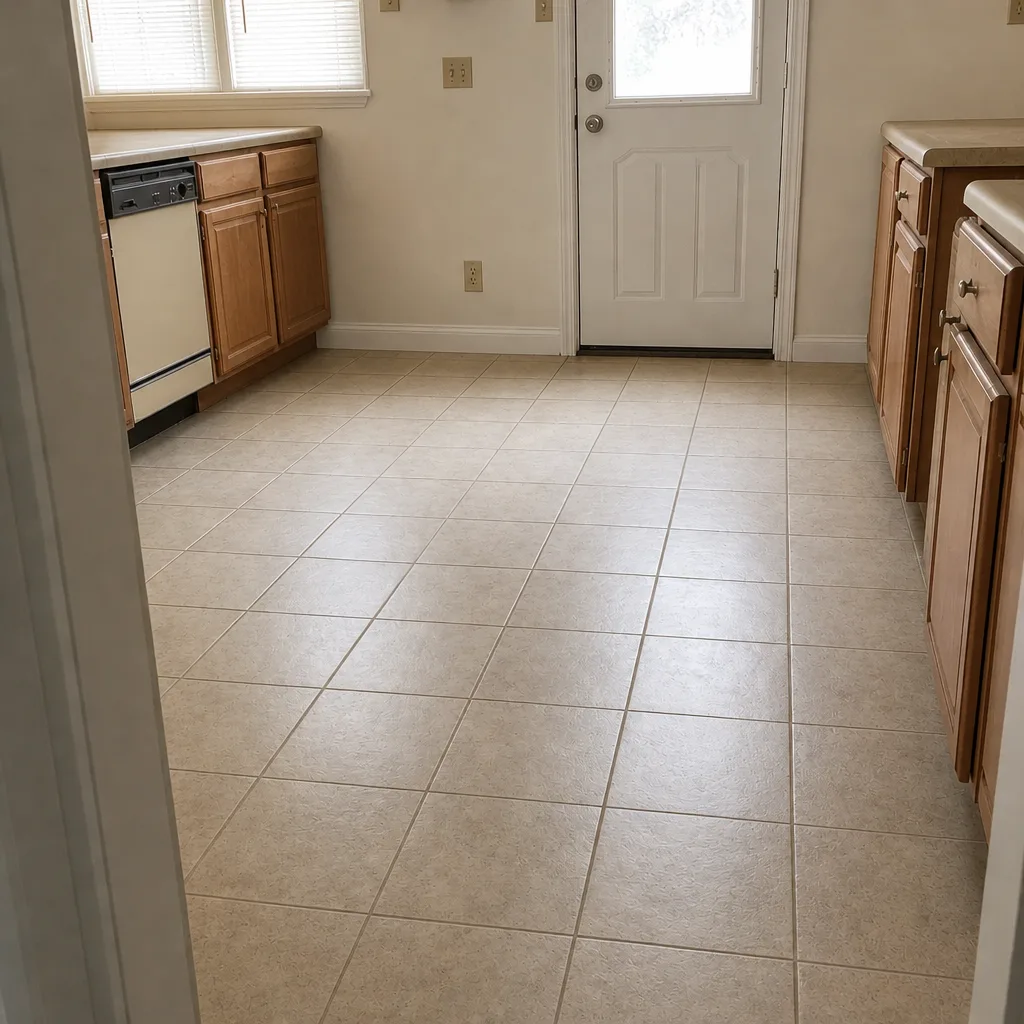
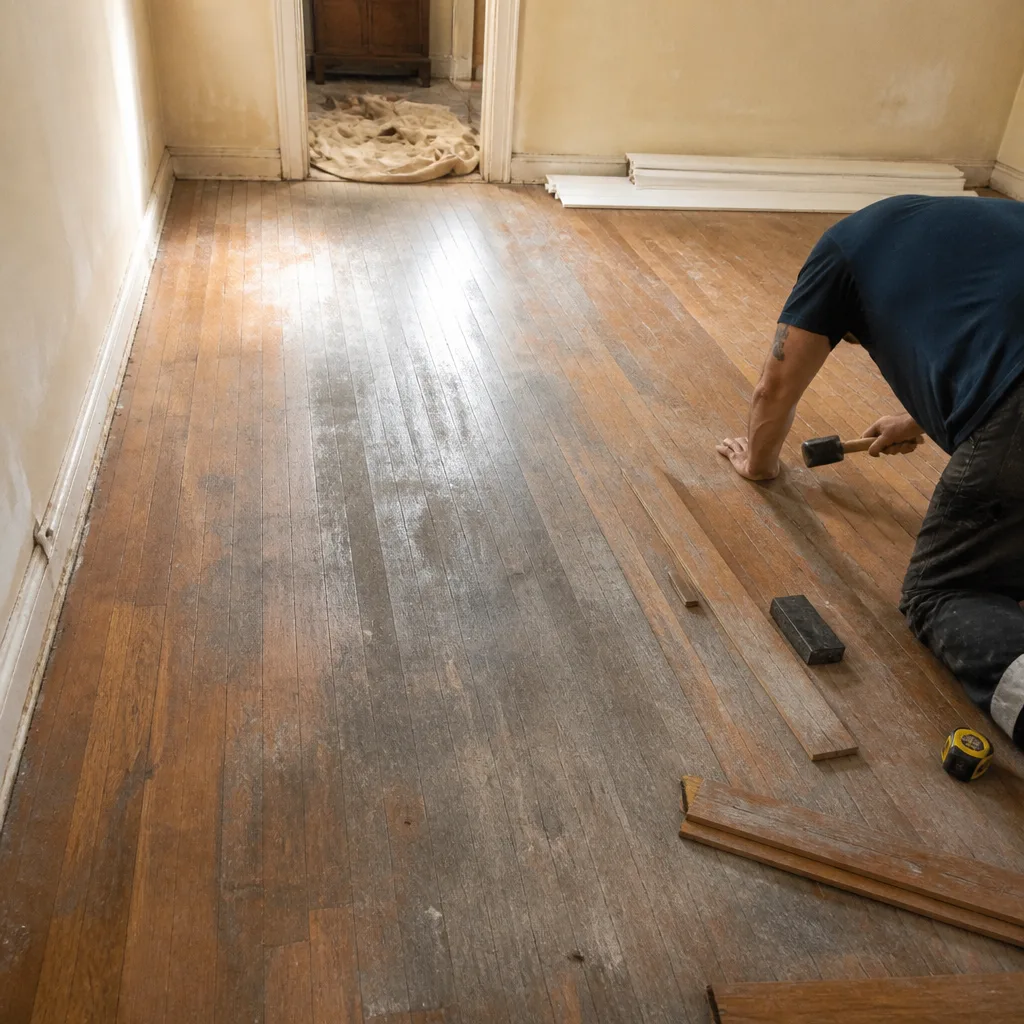
See the difference
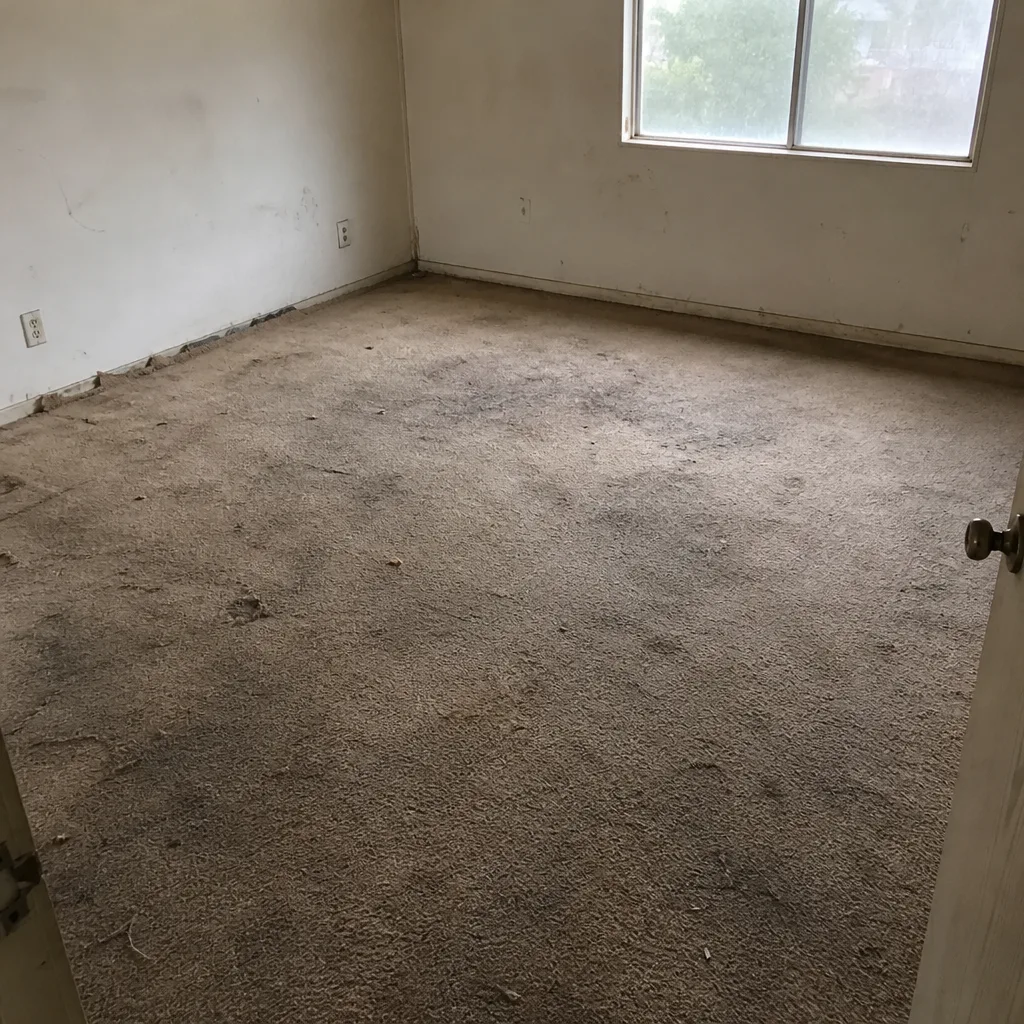 Before
 After
 Before
 After
 Before
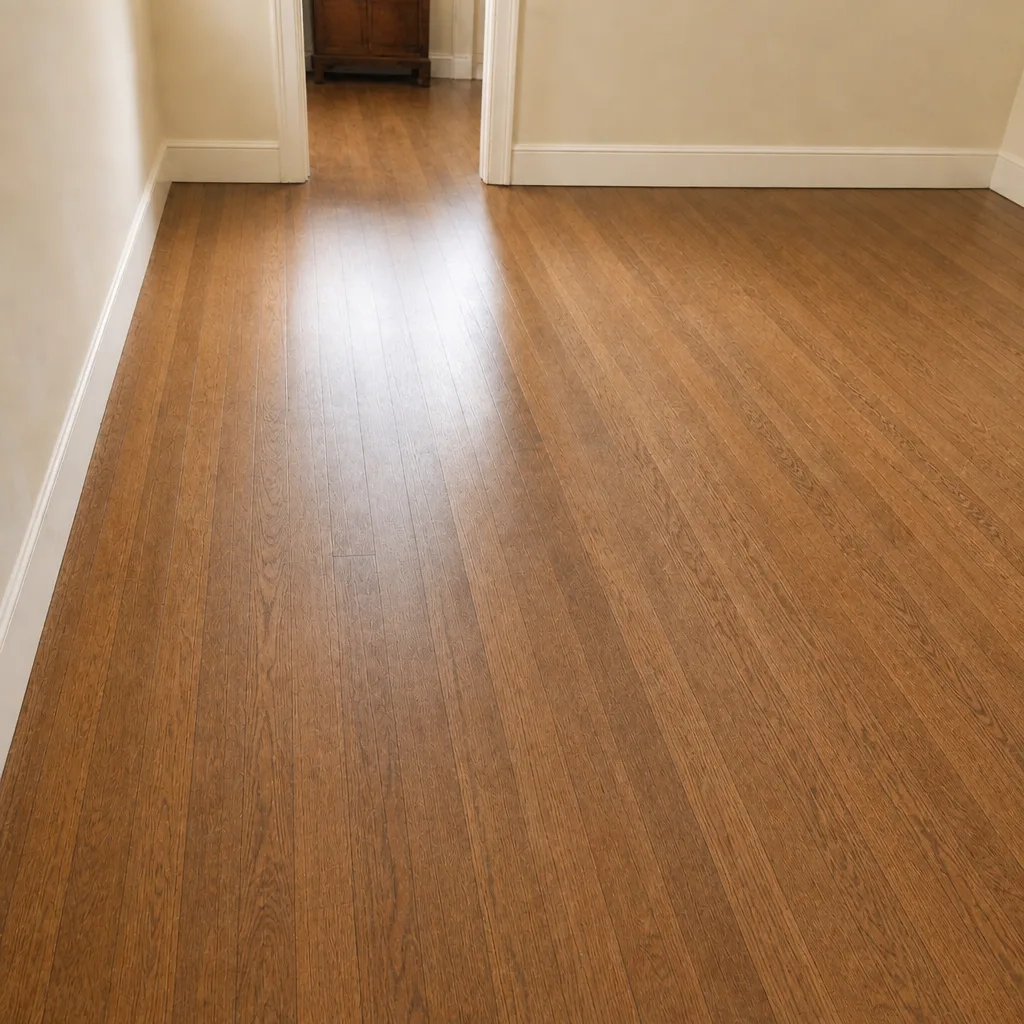 After
Common Mistakes to Avoid
- Dry-mopping a dusty desert floor. It drags mineral grit across the finish, and on hardwood that quietly dulls the surface over months. Damp-mop with a pH-neutral cleaner instead.
- Using vinegar, bleach, or ammonia on LVP or finished wood. These are common “cheap” cleaners and they’re the wrong chemistry for a wear layer or a wood finish. Pick a cleaner matched to the material.
- Steam-mopping vinyl or laminate. Heat and moisture driven into seams is the fastest route to edge swelling and joint failure. A damp mop is enough.
- Ignoring dry-season humidity. Low indoor humidity opens hairline gaps in hardwood and laminate; a humidifier run consistently beats a repair later.
- Letting sun beat a new floor day after day. Mesquite UV fades color and bleaches carpet in a bright patch. Window coverings on south and west exposures are cheap insurance.
- Neglecting grout lines on tile. The tile will look new for decades while the grout slowly darkens with dust. A soft-brush scrub with a pH-neutral cleaner keeps it even.
- Rubbing a spill instead of blotting it. Rubbing drives the stain deeper and spreads it. Blot from the outside in, dry fully, and check product guidance for your floor.
When to Call a Professional
Some jobs belong in the DIY routine, and some belong with someone who works with these materials every week. Call us when a hardwood floor is dull in traffic lanes but otherwise solid and you want to know whether refinishing is an option; when a new floor was installed and you want to confirm the right cleaner and a sensible routine before habits set in; when a carpet has stains or crushed pile that spot cleaning hasn’t handled; or when a tile grout line has darkened and a gentle scrub isn’t touching it. Picking the product is also a pro conversation: options at every price point, installed to the same standard, and nine brands, one contractor, spanning Shaw, Mohawk, COREtec, Pergo, Karndean, and Daltile. Flooring Mesquite offers free estimates in Mesquite, so start with a look at your floor and a written quote. Call (844) 560-4155. We answer 24/7. Fast dispatch from 7am to 7pm, Sunday through Friday.
Frequently Asked Questions
Start as soon as the installer says the floor is ready for use, and stick to the product instructions for any specific first-clean guidance. For most materials, that means sweeping before the first damp-mop and using a pH-neutral cleaner. If you’re unsure when to start, call (844) 560-4155 for a free estimate visit, and we’ll confirm the routine for your exact product.
Remove grit with a soft sweep or hard-floor vacuum, then damp-mop with a pH-neutral wood cleaner and a nearly dry mop. Avoid dry-mopping on a dusty floor, since dragging alkaline grit is what dulls the finish. A free estimate can tell you whether refinishing is worth exploring for a floor that’s already dulled.
It’s the simplest way to keep indoor humidity steady enough that wood and laminate seams don’t open as the air dries out. Use a hygrometer and keep it moderate rather than extreme. Remember the product instructions and the written estimate set the final word on care. Call (844) 560-4155 to book a free estimate if you’re deciding on materials or refinishing.
Vinegar, bleach, ammonia-based cleaners, and abrasive scrubbing pads can dull or damage the wear layer of luxury vinyl plank. Steam mops are also a bad idea because they force heat and moisture into seams. A pH-neutral vinyl floor cleaner and a damp mop are the routine; call (844) 560-4155 for a free estimate if you’re thinking about replacing worn plank.
Often it can, but whether any specific floor can be refinished depends on the thickness of the wood, its condition, and how many times it’s been sanded before, and that’s checked at an estimate visit. Refinishing restores the floor you have. Call (844) 560-4155 for a free estimate and we’ll tell you what’s realistic for your floor.
Strong UV through those windows fades wood tones, bleaches carpet dye, and can yellow or fade vinyl and laminate over time. UV-filtering film, sheers, or blinds during the strongest sun slow it, and rotating rugs and furniture evens out exposure. If you’re choosing a new floor for a sun-heavy room, an estimate is the moment to ask about the material; call (844) 560-4155.
The Bottom Line
The right care routine in Mesquite comes down to four habits: remove grit before it grinds (damp-mop, don’t dry-dust), keep cleaning products matched to the material, keep indoor humidity steady so wood and laminate don’t gap, and control UV at your south and west windows. Hardwood benefits most from that discipline and can often be refinished rather than replaced; LVP, laminate, and tile hold up better to the daily grind but still need pH-neutral cleaners and prompt spill cleanup; carpet lives and dies by vacuum technique. Match the routine to the material, and the floor you have will keep earning its place.
Written by the team at Flooring Mesquite.