
Last updated November 17, 2026
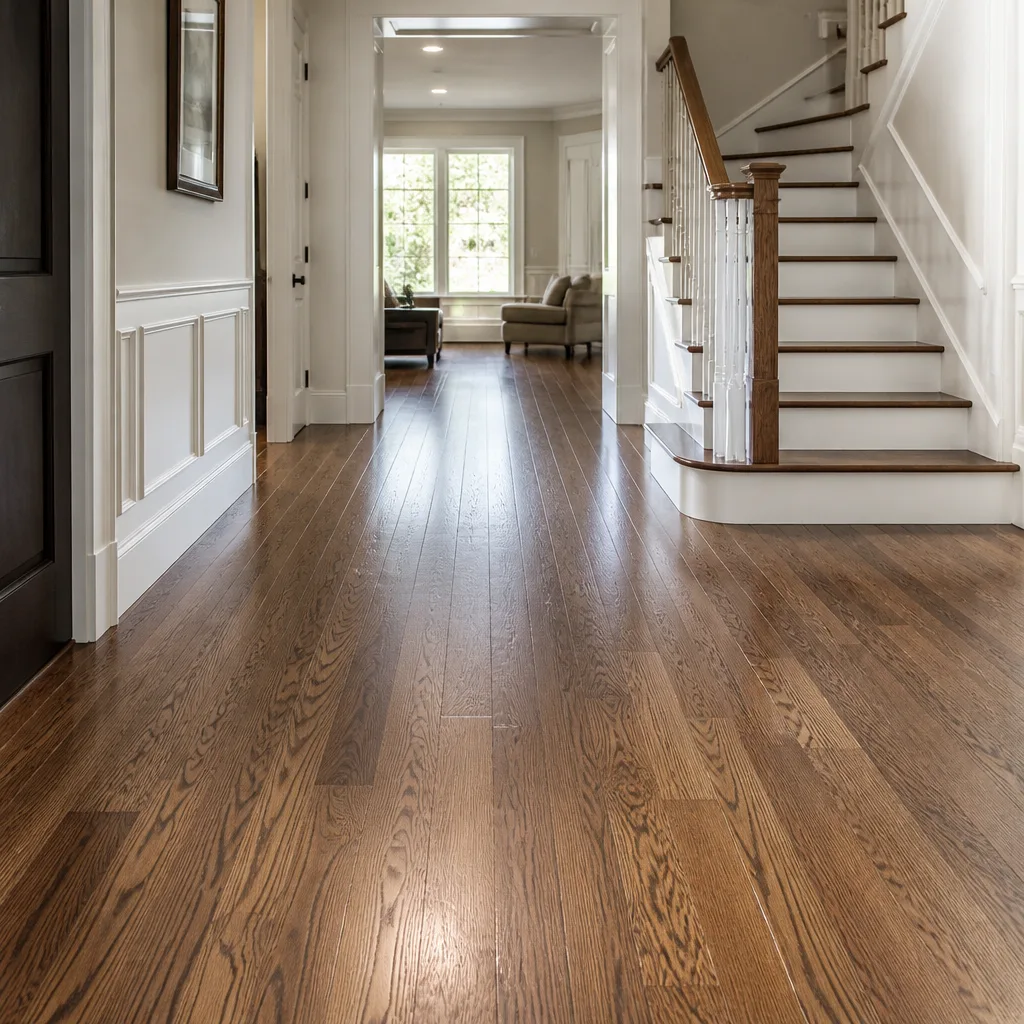 Hardwood
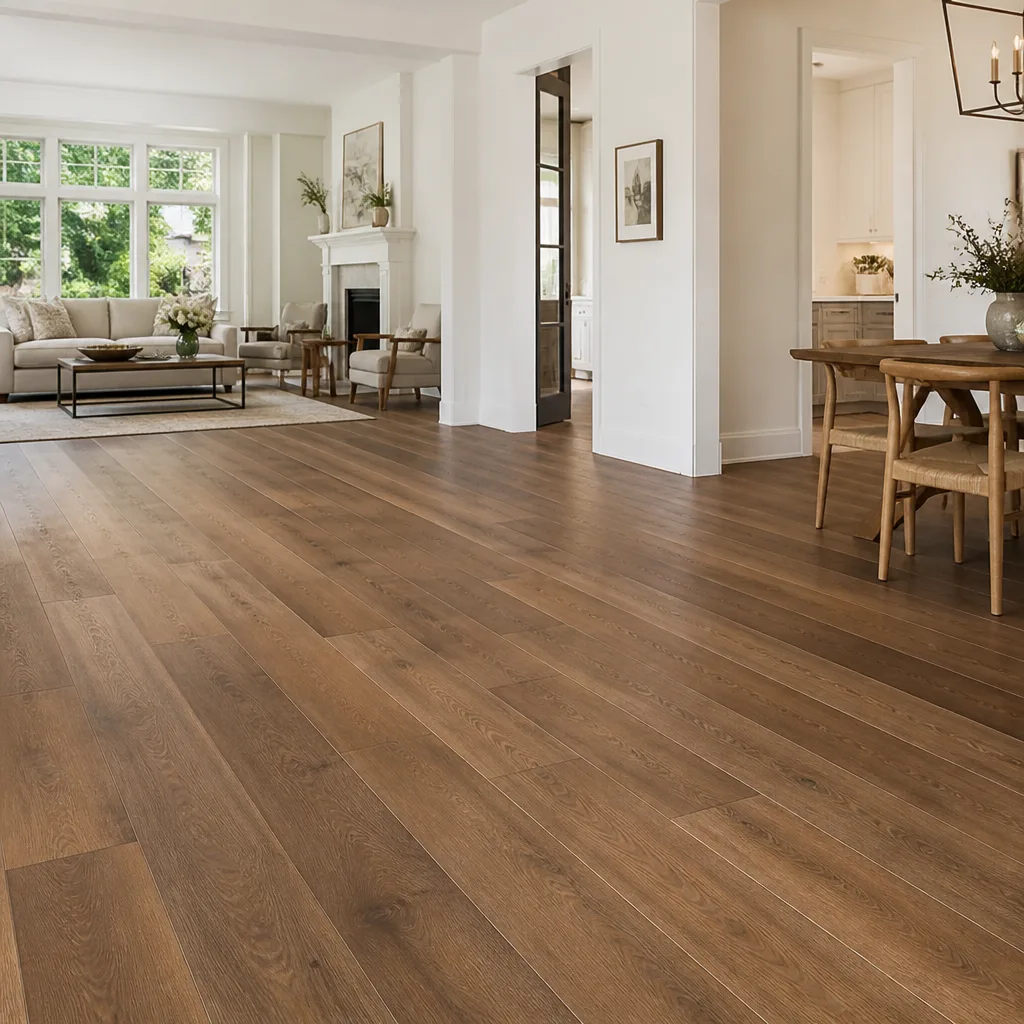 Engineered hardwood
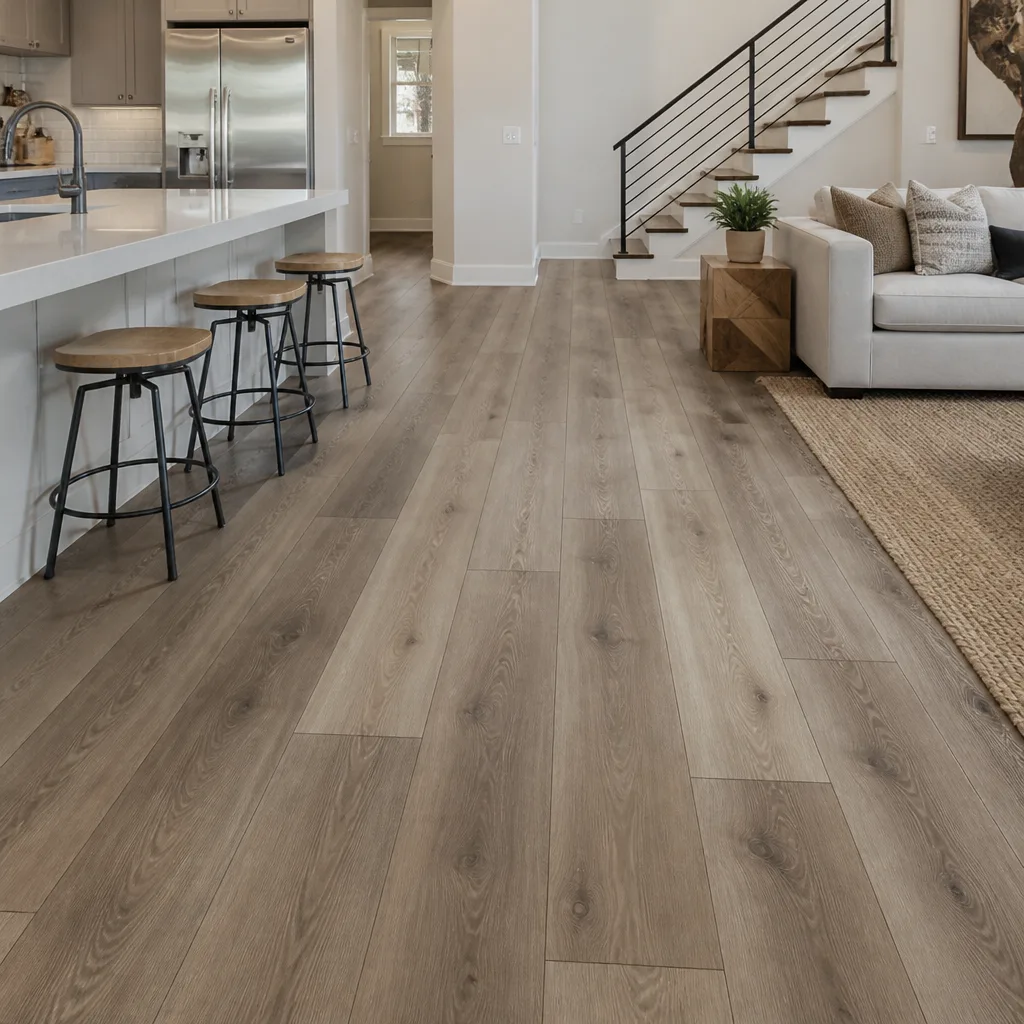 Luxury vinyl plank
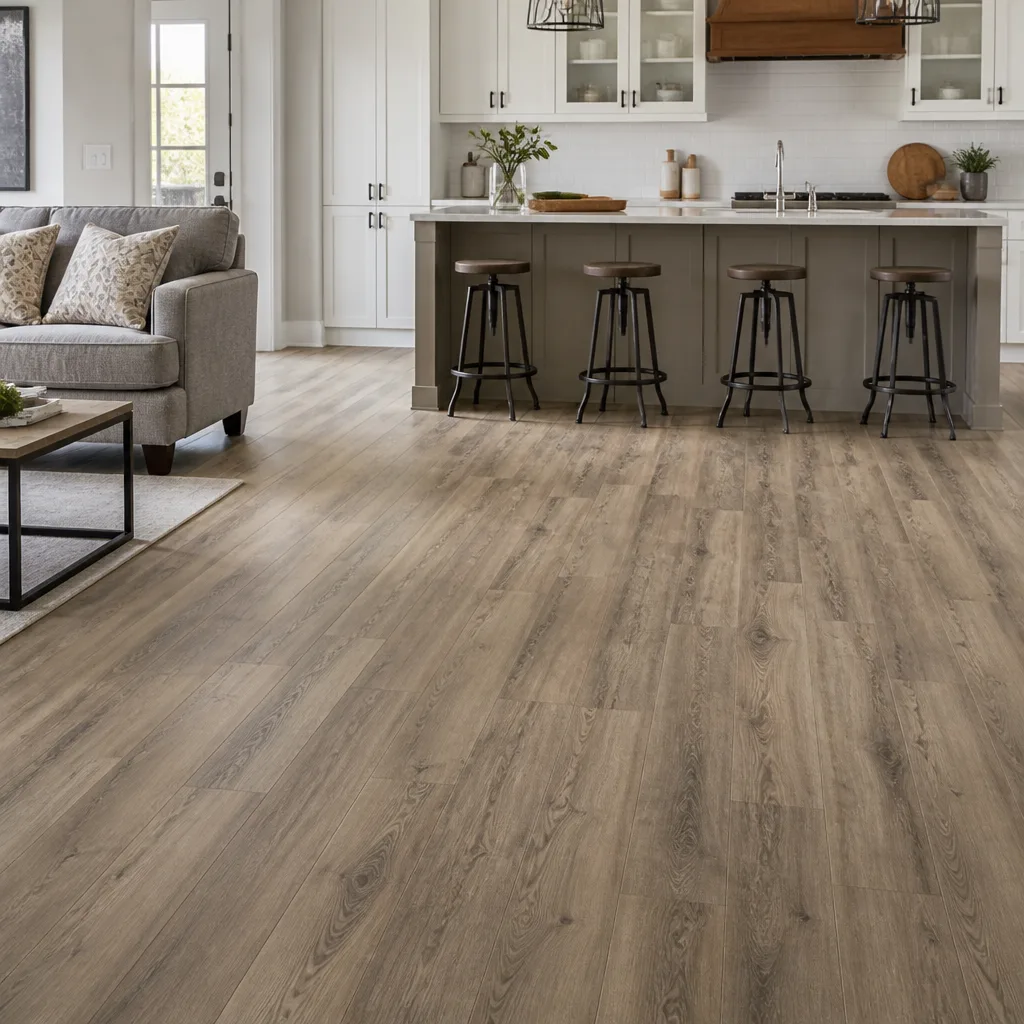 Laminate
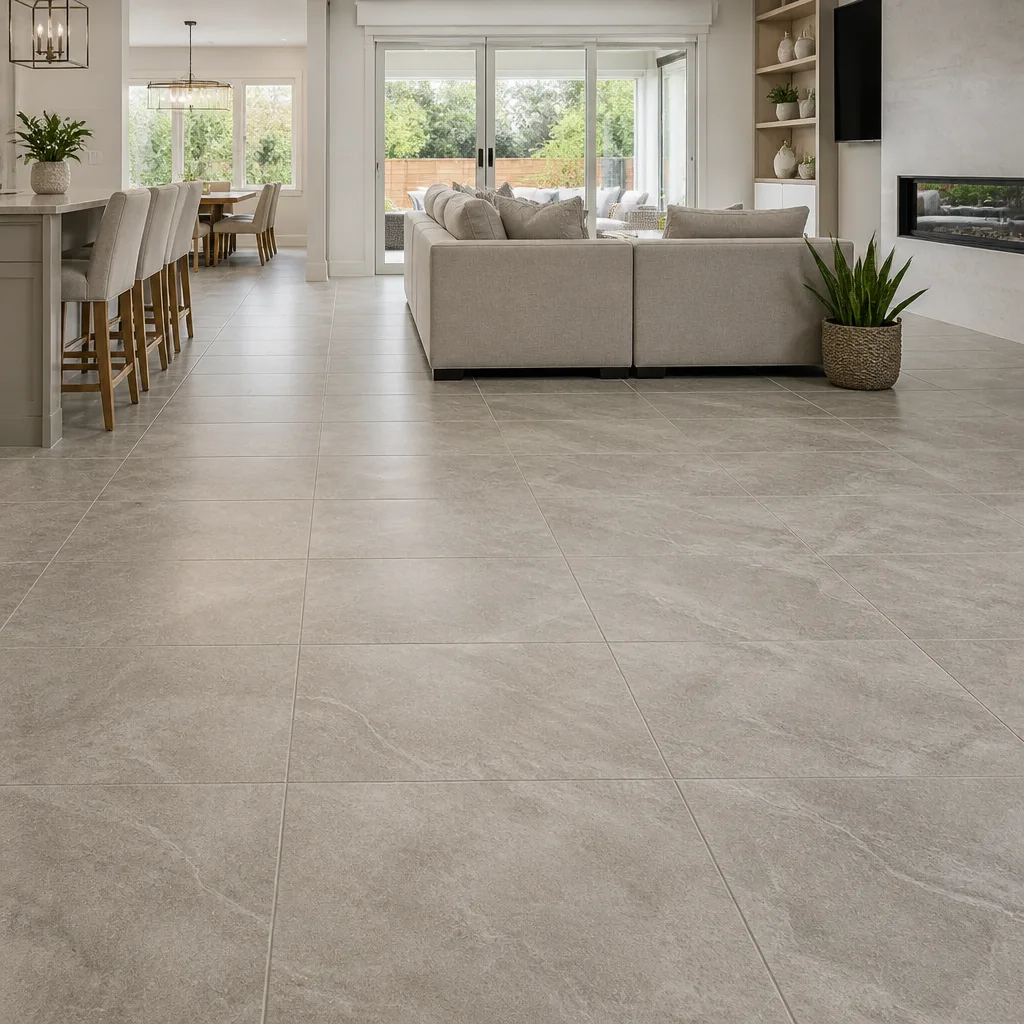 Porcelain tile
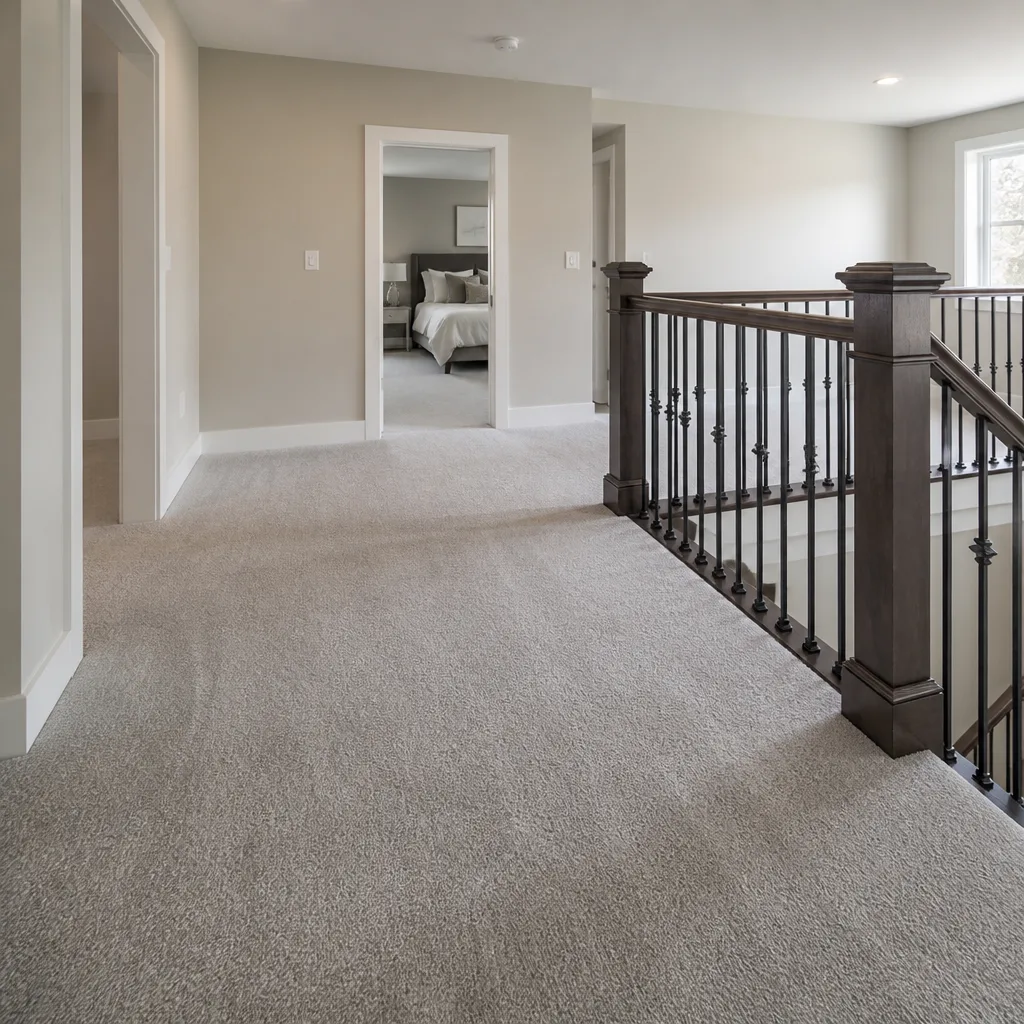 Carpet
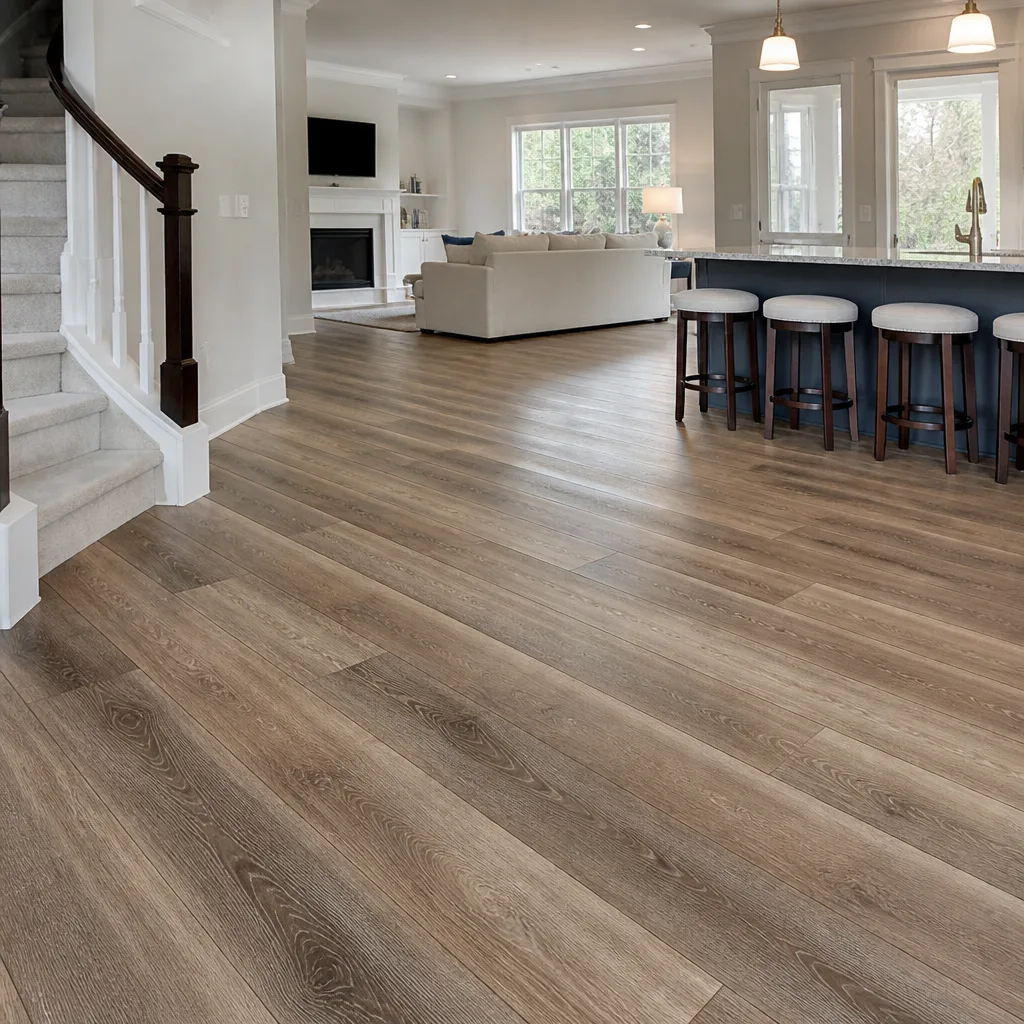 Shaw
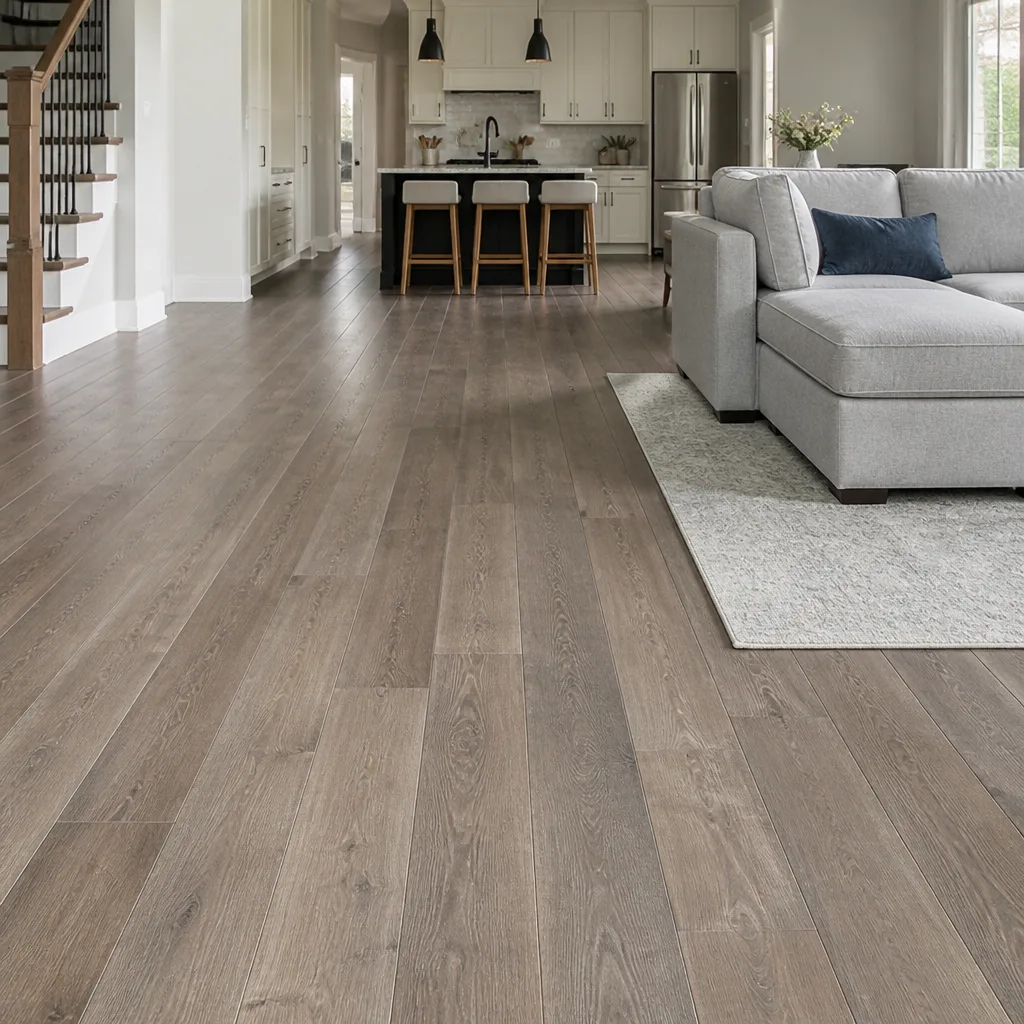 Mohawk
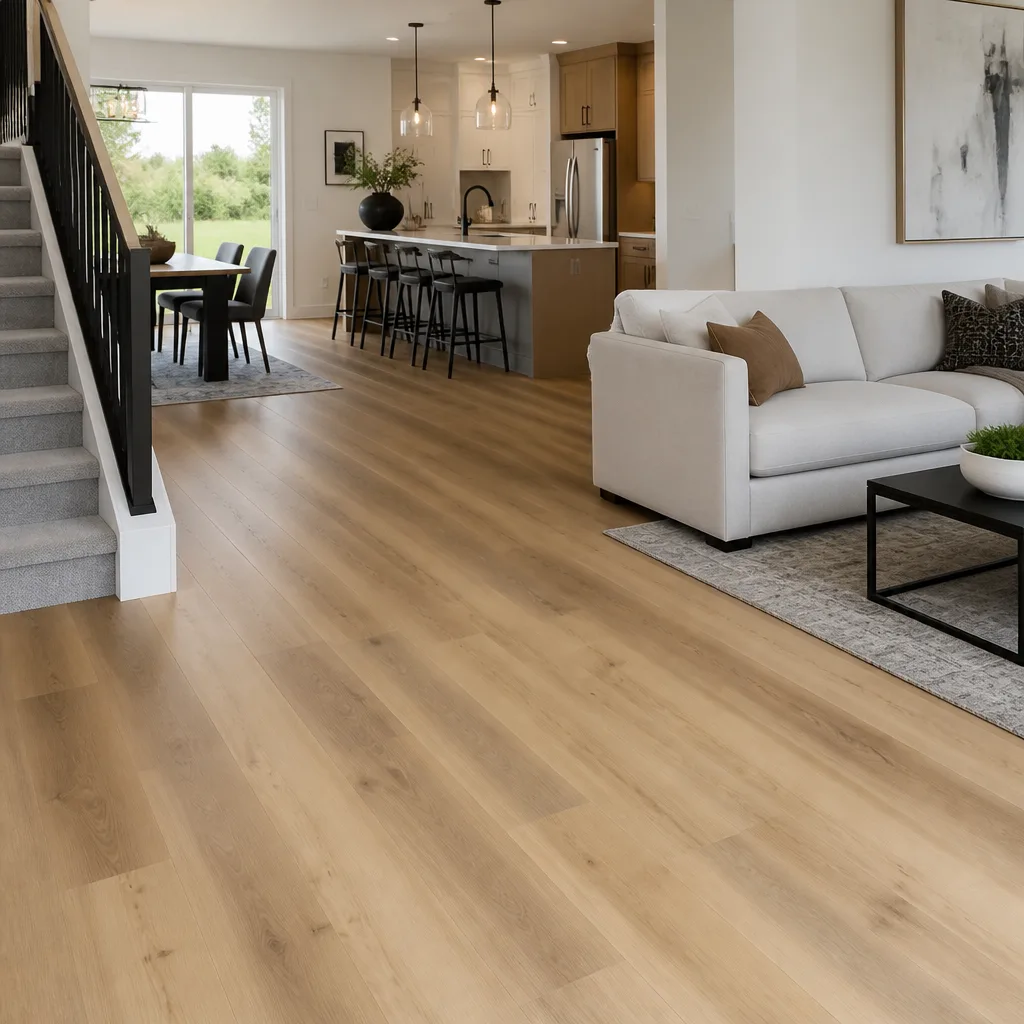 COREtec
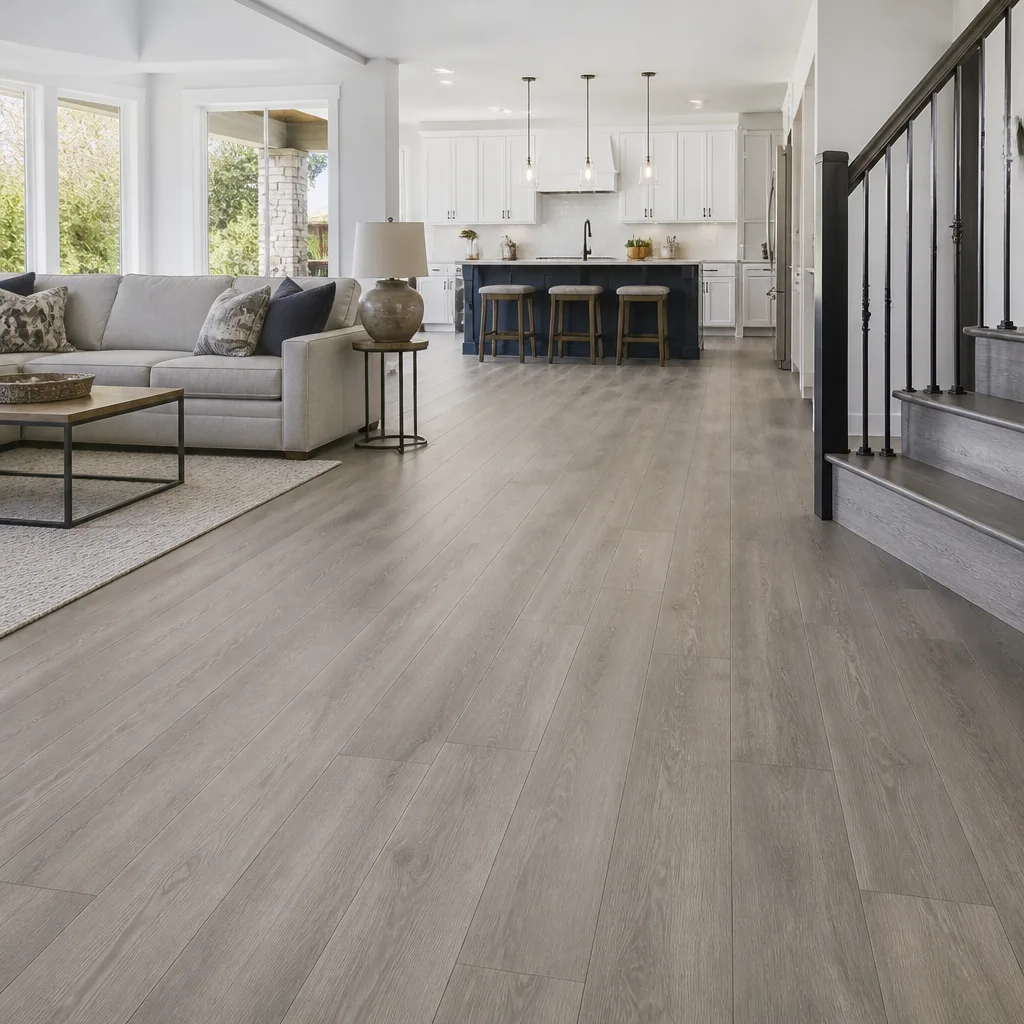 Pergo
Free in-home measure and written estimate: Shaw, Mohawk, COREtec and Pergo lines compared on your own rooms, with carpet, tile, vinyl plank, laminate and hardwood laid out side by side
Get your free estimateChoosing the Right Flooring for Every Room in Mesquite Homes
Installing the same luxury vinyl plank through an entire Mesquite home sounds like a clean, cohesive design decision. In practice, it’s one of the most common reasons a laundry room floor gets torn out long before the rest of the house needs anything. A master bedroom and a utility room share walls, but they don’t share moisture exposure, foot traffic, or how they sit on the slab. The right flooring isn’t chosen at the category level. It’s chosen room by room, using the conditions that room actually sees. This guide walks through each space in a typical Mesquite home, explains the material reasoning behind every recommendation, and shows where mixing floors makes sense and where it costs you.
Quick Answer
The best flooring for each room in a Mesquite home depends on moisture, traffic, subfloor type, and acoustics, not on a single whole-house material. Carpet still wins in bedrooms for sound and comfort, porcelain tile handles kitchens, bathrooms, and laundry rooms, and luxury vinyl plank is the workhorse for living areas and garage-entry transitions. Site-finished hardwood refinishing lets you restore existing wood rather than replace it. The right mix usually includes two or three materials, specified room by room.
Styles & brands we work with
- Hardwood
- Engineered hardwood
- Luxury vinyl plank
- Laminate
- Porcelain tile
- Carpet
- Shaw
- Mohawk
- COREtec
- Pergo
Table of Contents
- Why Room-by-Room Beats Whole-Home Uniformity
- How Mesquite’s Open-Plan Layouts Change the Acoustics Calculation
- Room-by-Room Material Map for Mesquite Homes
- The Garage-Entry Transition Zone: Your Most Abused Floor
- Slab Foundations and Radiant Heat: What They Mean for Flooring
- Mixing Materials vs. Whole-Home Uniformity
- A Step-by-Step Plan for Choosing Floors in Mesquite
- Common Mistakes to Avoid
Why Room-by-Room Beats Whole-Home Uniformity
Every room in a house applies its own set of stresses to the floor underfoot. A hallway might see a few hundred footfalls a day. A kitchen sees dropped pans, splashed water, spills, and chair legs dragged across the surface. A laundry room sees condensation, occasional overflow, and machines that shift and vibrate. A bedroom sees bare feet and furniture that never moves. The conditions are different enough that a material chosen for one room can genuinely underperform in the next.
Here’s what changes from room to room, and why it matters when you’re picking a floor:
- Moisture exposure. Kitchens, bathrooms, laundry rooms, and garage entries see standing water or high humidity far more often than a bedroom. That’s the reason luxury vinyl plank and porcelain tile hold up in wet zones while carpet and site-finished hardwood don’t belong there.
- Foot traffic. Entryways, hallways, and living rooms take the heaviest concentration of footfalls. Bedrooms and formal dining rooms take the least. Specification should match the wear.
- Subfloor and slab conditions. In Mesquite, most homes sit on slab-on-grade foundations. That changes which adhesives and underlayments are appropriate, and it changes how a floor behaves through seasonal swings.
- Acoustics. Hard surfaces reflect sound. On a slab, there’s no basement or wood joist cavity to absorb it. Open-plan great rooms amplify the effect.
- Resale value. Buyers in the Mesquite market tend to evaluate floors room by room. A well-chosen bedroom carpet doesn’t hurt resale any more than a well-chosen tile kitchen floor does. What hurts is a mechanically wrong specification, like a laundry room LVP that’s already failing when the buyer walks the house.
The takeaway isn’t that you need five different floors. It’s that the decision deserves to be made in each room, even if the answer for four of those rooms turns out to be the same category. When a homeowner comes to us with a single material in mind, we walk the house with them and check traffic patterns, moisture exposure, and the slab before we agree to it.
How Mesquite’s Open-Plan Layouts Change the Acoustics Calculation
Most Mesquite homes built in recent decades use a single-story, open-plan layout: a great room that flows into the kitchen and dining area with few intervening walls. That layout is wonderful for light and sightlines. It’s also a hard-surface acoustics trap if you’re not careful about which materials you specify.
In an open great room, sound has nowhere to go but up and out. There’s no stairwell to trap it, no second floor to insulate it, and no basement to absorb the low frequencies. Whatever surface you place over the slab determines whether the room feels like a comfortable living space or a waiting area at an airport. Two materials that look similar in a showroom sample can sound completely different in a 30-foot great room.
Here’s how we think through the acoustics in an open-plan Mesquite home:
- Identify the reflective surfaces. Hard flooring, drywall ceilings, and large windows all bounce sound back into the room. Every reflective surface you add raises the total.
- Add absorption where the room needs it. Carpet with a quality cushion underlayment is the single most effective sound absorber in a residential house. A carpeted bedroom adjacent to an open living area dampens noise from both sides.
- Use rugs strategically. Area rugs over LVP or site-finished hardwood in the great room reduce echo without forcing the whole room into carpet.
- Specify acoustic underlayment under hard surfaces. When you’re choosing luxury vinyl plank or laminate for a great room, the underlayment matters as much as the surface. The right one cuts impact noise and helps the floor feel less hollow underfoot.
- Match material transition to sightline. In an open plan, the eye follows the floor. If you transition from hard surface to carpet at a doorway, the visual break should sit at a natural architectural line, not in the middle of a room.
One practical note: in a Mesquite home where the kitchen, living, and dining spaces open into one another, we often see the best acoustics come from mixed rather than uniform surfaces. Tile in the kitchen, LVP in the living area, and carpet in the bedroom wing gives you a balanced room without any single material doing all the work.
Room-by-Room Material Map for Mesquite Homes
This is the section most homeowners come to first, and it deserves to be a standalone answer. Here’s how we approach material selection by room in a Mesquite house, with the reasoning behind each choice.
Living Rooms and Great Rooms
Luxury vinyl plank is the practical default. It handles concentrated foot traffic, it’s water-resistant (not waterproof, which no floor is), and it comes in a wide enough range of visuals that it can match almost any design plan. It also installs well over the slabs common in Mesquite homes, provided the slab has been checked for flatness and moisture before installation. COREtec and Karndean both offer design-forward LVP lines that hold up to this kind of use, and LifeProof provides a strong value-tier option that performs well in a busy family room.
Kitchens
Porcelain tile earns its place in the kitchen. It’s dense, it handles dropped pans and spilled liquid, and it doesn’t care about the occasional wet mop. Daltile’s porcelain lines give you real flexibility in the visual – stone-look, wood-look, large-format – without giving up the material performance. Grout lines matter for cleaning; we talk through grout width and sealing at the estimate. Ceramic tile is a reasonable alternative if the budget is tighter, though it’s less dense than porcelain.
Bathrooms and Powder Rooms
Tile is the right answer in Mesquite bathrooms. The moisture load is high, the floor sees standing water regularly, and the surface needs to shrug it off. Porcelain handles this without fuss. There’s no sensible case for carpet or hardwood in a full bathroom, and LVP is workable but not ideal in a room that sees steam and splash every day. If you want to be careful about slip resistance on a bathroom floor, we talk through tile finish and texture at the estimate.
Bedrooms
Carpet remains the best choice for most Mesquite bedrooms. The reasons are sound, comfort, and warmth underfoot. A bedroom usually has lighter foot traffic than the rest of the house, so the wear case for hard surfaces is weak, while the acoustics and comfort case for carpet is strong. Carpet also adds absorbent surface to a house that otherwise might lean hard. If a homeowner prefers hard surface in the master bedroom, LVP is the practical alternative, but adding a quality rug and underlayment is almost always worth the extra line item.
Laundry and Utility Rooms
This is the room most homeowners get wrong, and it’s the reason we wrote this guide. Laundry rooms combine occasional standing water, high humidity, and vibrating heavy appliances. Sheet vinyl and ceramic or porcelain tile are the sensible choices. LVP is a middle-ground option, but the room’s moisture load – especially when a washer line fails or a dryer vents poorly – pushes toward tile or resilient sheet. Carpet in a laundry room is a specification we don’t recommend, even as a cost-saving move.
Hallways and Entryways
Heavy foot traffic and, in Mesquite, the transition from outdoor dust and grit to interior. LVP is a strong choice for the hallway run. Tile is a reasonable upgrade where the budget allows, particularly at the front door. The key is to match the hallway material to the living room material it connects to, so the visual line stays continuous.
Dining Rooms
LVP or site-finished hardwood work well here, depending on whether the homeowner wants a warm, traditional look or a modern hard surface. Hardwood refinishing is worth discussing as a restore option if the room already has wood in reasonable condition.
Home Office and Flex Rooms
These rooms usually see moderate traffic and low moisture. LVP and laminate are both workable, with LifeProof and Armstrong offering value-tier options. If the room has become a gym or a playroom, durability matters more than finish, and LVP usually wins.
The Garage-Entry Transition Zone: Your Most Abused Floor
Most Mesquite homes have a garage-entry hallway or “mudroom” transition where the driveway, the garage slab, and the interior floor all meet within a few feet. It’s the single most under-specified floor in the house. It’s also the one that gets abused the most.
Think about what crosses that threshold daily:
- Road grit, dust, and Mesquite’s desert soil, tracked in on shoes
- Water and mud carried in during monsoon-season rain
- Hard-wheeled equipment – pressure washers, tool carts, garbage bins that get dragged across the threshold
- Sun-baked exterior heat radiating in from the garage slab
- Pet traffic, often wet from a backyard sprinkler or a water bowl
The default material for this zone should be tile or a hard-wearing LVP with a surface texture that masks scratches and hides grit. The floor here also needs to be easy to sweep and mop, because the mess is coming in daily. It needs to handle temperature swings between air-conditioned interior and sun-heated garage without cupping, gapping, or adhesive failure.
The transition point itself matters as much as the material. If the floor changes from tile at the entry to LVP in the hallway, the seam needs a proper transition strip and a subfloor that’s consistent on both sides. Improperly specified transitions are one of the most common reasons a floor starts to fail within a few years. We check the transition zone specifically at the estimate visit, because it’s the detail that gets forgotten in the excitement of picking a surface.
This is also where the choice of underlayment or adhesive matters most. Some adhesive systems handle the temperature range and moisture load better than others, and residential product instructions – which we follow without modification – specify which adhesives and underlayments are appropriate. Standing water and moisture from below still have to be addressed no matter what surface you install.
Slab Foundations and Radiant Heat: What They Mean for Flooring
Most Mesquite homes sit on slab foundations. Some have embedded radiant heat or are built to accept it. Both conditions affect which products and adhesives you can safely install over them, and both affect how the floor performs over time.
Here’s what we evaluate before recommending a product for a slab home:
- Slab moisture. Concrete releases moisture vapor over time. We test the slab before specifying an adhesive or underlayment, and we follow the product manufacturer’s instructions on what readings are acceptable for their product. Not every adhesive tolerates the same moisture level.
- Slab flatness. Every manufacturer publishes a flatness requirement for their product. We check the slab against that specification at the estimate, and we talk about any prep needed.
- Radiant heat compatibility. Some vinyl, tile, and carpet products work better over in-floor heat than others. The manufacturer’s documentation sets the acceptable temperature range for each product. We don’t recommend a product over heat unless its instructions cover the application.
- Adhesive selection. Under radiant heat, adhesive choice matters – the wrong one can soften or fail. We match adhesive to the product and to the heat spec, and we say so in the written estimate.
If a Mesquite home has an older slab with visible cracks, that doesn’t automatically rule out the floor you want. It just means the estimate needs to include prep and a membrane system that handles crack isolation. The right answer depends on the slab and the product, and it’s the reason we don’t quote over the phone.
Mixing Materials vs. Whole-Home Uniformity
There’s a real debate here, and both sides have merit. Whole-home uniformity is easier to design around, easier to shop for, and creates a clean visual flow through an open floor plan. A single LVP through the entire house is simple to clean, easy to maintain, and looks polished in photographs.
Mixing materials creates better rooms. Carpet in the bedroom and LVP in the great room gives you comfort where you need it and durability where you need it. Tile in the kitchen and laundry rooms is materially correct for the moisture load. A site-finished hardwood in the dining room or a restored original wood floor adds character a synthetic surface can’t match.
In our experience working in Mesquite, the practical trade-off goes like this:
- Uniform LVP throughout: Best for open-plan, high-traffic homes and rentals. Weakest performance in highly moist rooms and weakest comfort in bedrooms. Often the cheapest total floor.
- Mixed materials: Best for owner-occupied homes where comfort and long-term performance matter more than the shopping simplicity. Higher design complexity, but materially correct in every room.
- Two-material compromise: LVP in living areas and hallways, carpet in bedrooms. This is the most common Mesquite specification we install, and it gives you most of the acoustic benefit without tile-work in every room.
- Restore instead of replace: Where existing hardwood is in the house, refinishing is often the strongest resale move. It preserves the original material and adds value at a fraction of new installation cost. We check wood thickness and condition at the estimate, since not every floor can be refinished.
Resale value moves in the same direction as material correctness. Buyers don’t discount a home for having carpet in a bedroom – they discount it for having a laundry room floor that’s already failing at year three. The material decisions that pay off at resale are the ones that match each room’s real conditions.
A Step-by-Step Plan for Choosing Floors in Mesquite
If you’re starting from scratch on a flooring decision for a Mesquite home, this is the sequence we recommend. It mirrors how we structure an estimate visit.
- Walk the house room by room and list the moisture load. Which rooms see standing water or sustained humidity? Kitchens, bathrooms, laundry rooms, and garage entries are wet zones. Everything else is dry.
- List the traffic pattern. Which rooms see footfalls daily, and which only see them occasionally? Entries and hallways are heavy. Bedrooms and dining rooms are lighter.
- Confirm the subfloor and slab condition. Note whether the room is on a slab, whether radiant heat is embedded, and whether there are any visible cracks or moisture concerns. If you can’t tell, this is what the estimate visit exists to check.
- Check the acoustics. In open-plan living areas, ask whether a hard surface will echo. If the answer is yes, plan a rug, underlayment, or a carpeted room adjacent to absorb the sound.
- Set the budget with the material range in view. Brand range is where the price lives. LifeProof and Armstrong occupy one tier of the market, Karndean and COREtec another. The job standard doesn’t change across those tiers – you’re choosing a product, not a level of trade care.
- Pick the brand and product at the estimate, not before. Bring inspiration photos and the brands you’ve been researching. We’ll walk through what each brand’s product lines actually offer in your room, and we’ll steer you away from a product that doesn’t fit the subfloor or moisture spec.
- Book the install once the written estimate is signed. Flooring is a scheduled job: measure and estimate first, written price second, install day booked after that. That’s the sequence, and it protects you from a surprise on install day.
Common Mistakes to Avoid
- Running LVP through the laundry room. It’s the most common Mesquite specification error. The same LVP that’s perfect in the great room is often the reason a laundry room floor gets torn out in the first few years of use. Tile or resilient sheet is a better material bet in that room.
- Carpeting the garage-entry hallway. The threshold is the dirtiest, wettest, most abused square footage in the house. Carpet at the garage entry looks clean in the showroom and looks wrong the first rainy week after install.
- Skipping the slab moisture check. A beautiful LVP installed over a slab that’s releasing too much vapor will fail at the adhesive regardless of how good the product is. The check happens at the estimate, not after.
- Assuming every hardwood floor can be refinished. It depends on the thickness of the wood and its condition. We check that at the estimate visit – calling it in advance isn’t something we can do responsibly.
- Specifying an adhesive that doesn’t handle radiant heat. In slab homes with embedded radiant heat, the wrong adhesive will soften or fail. Product instructions set the acceptable adhesive, and we follow them.
- Picking the whole-home material before walking the rooms. The single-category decision is the source of most flooring regrets in a Mesquite home. Walk first, decide second.
- Hiring the installer before confirming the brand access. Nine brands, one contractor is the point. If your installer only has access to one line, you’re not really choosing a floor – you’re choosing their SKU.
See the difference
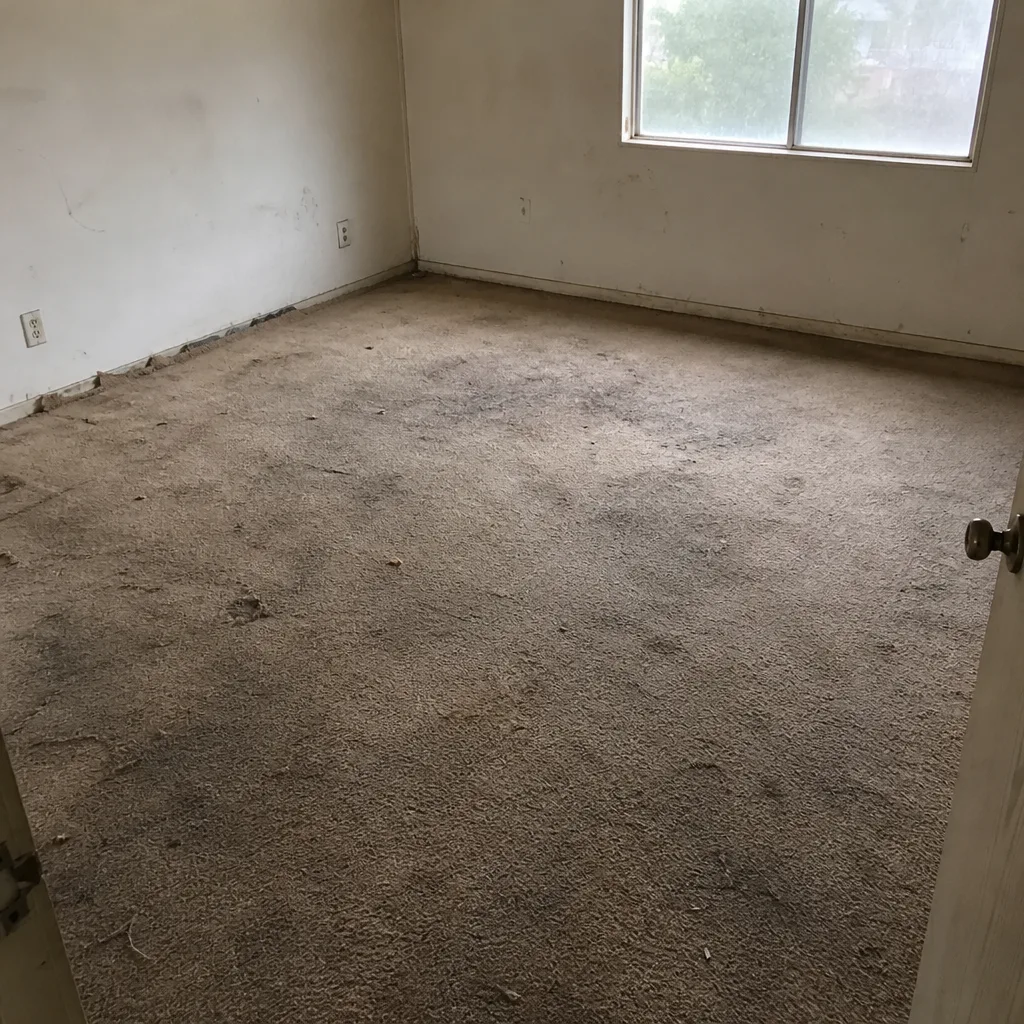 Before
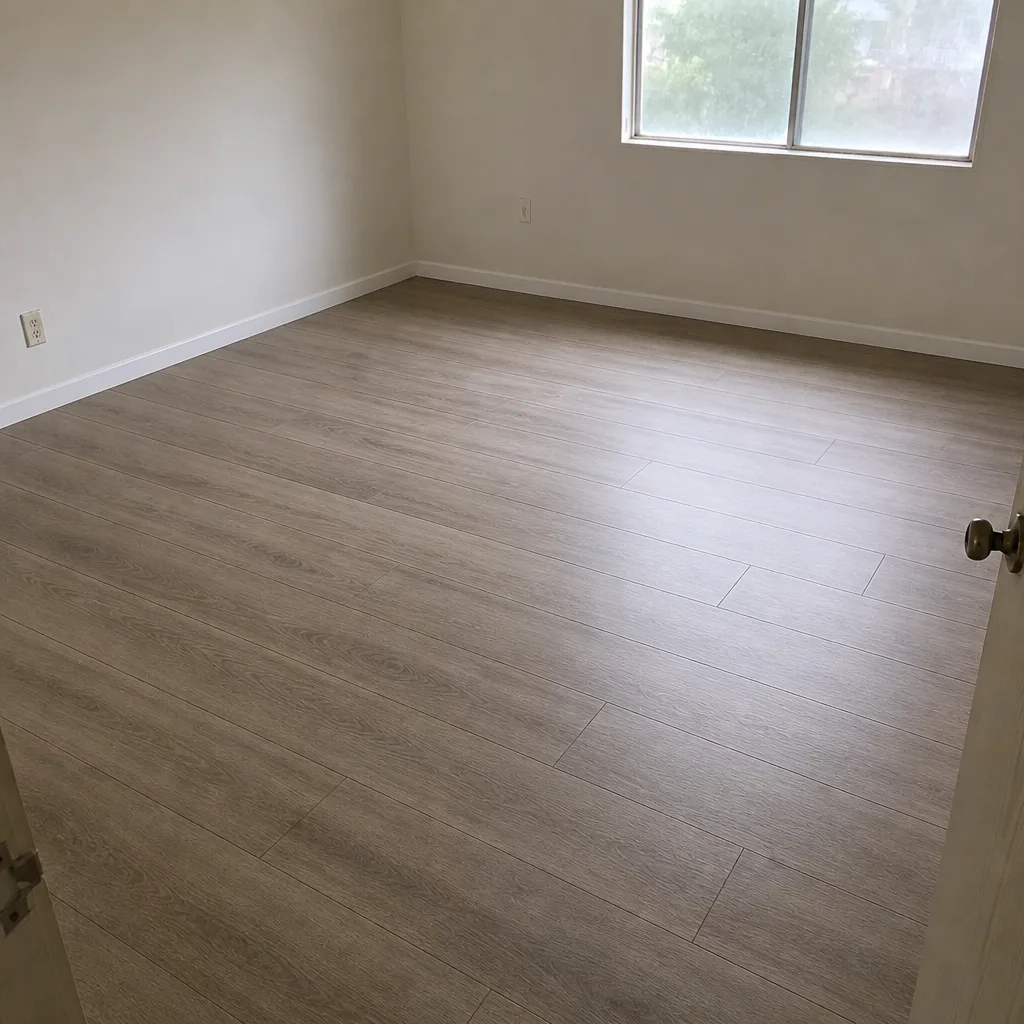 After
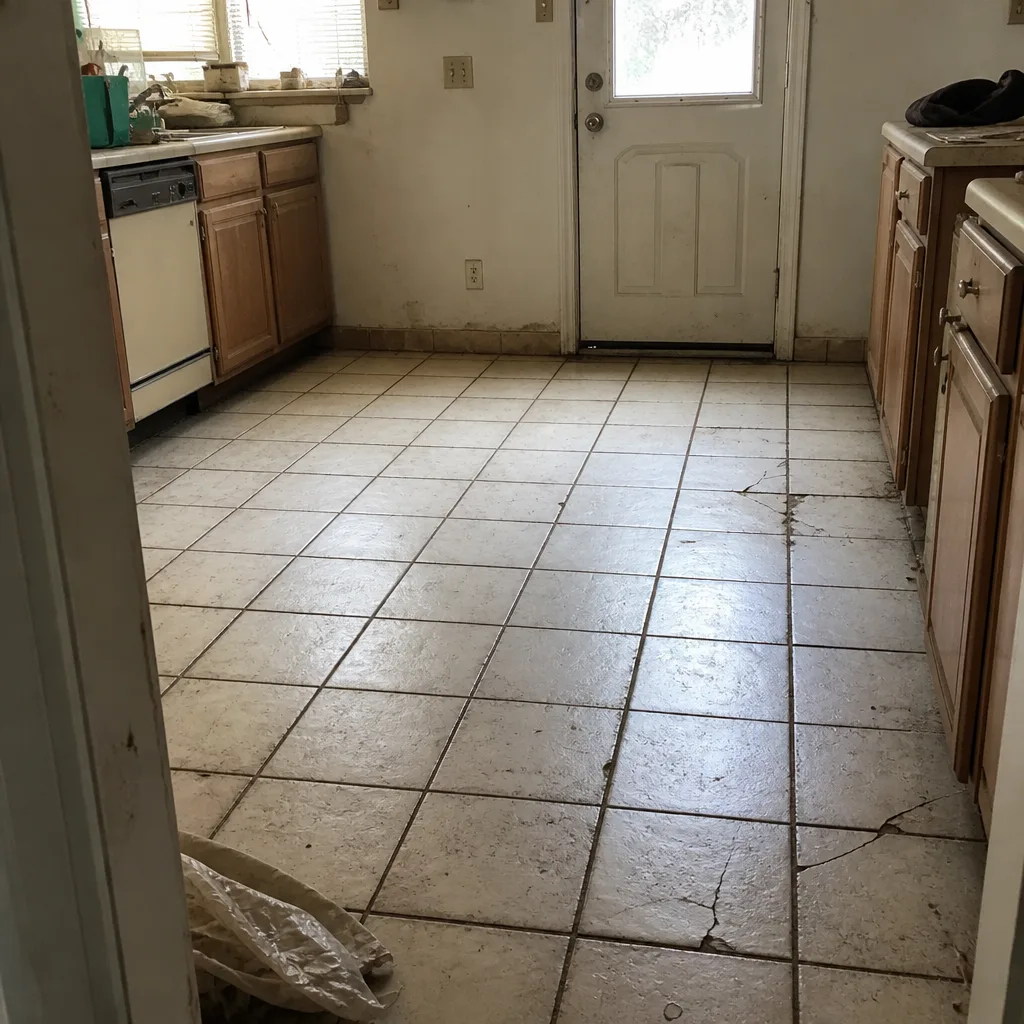 Before
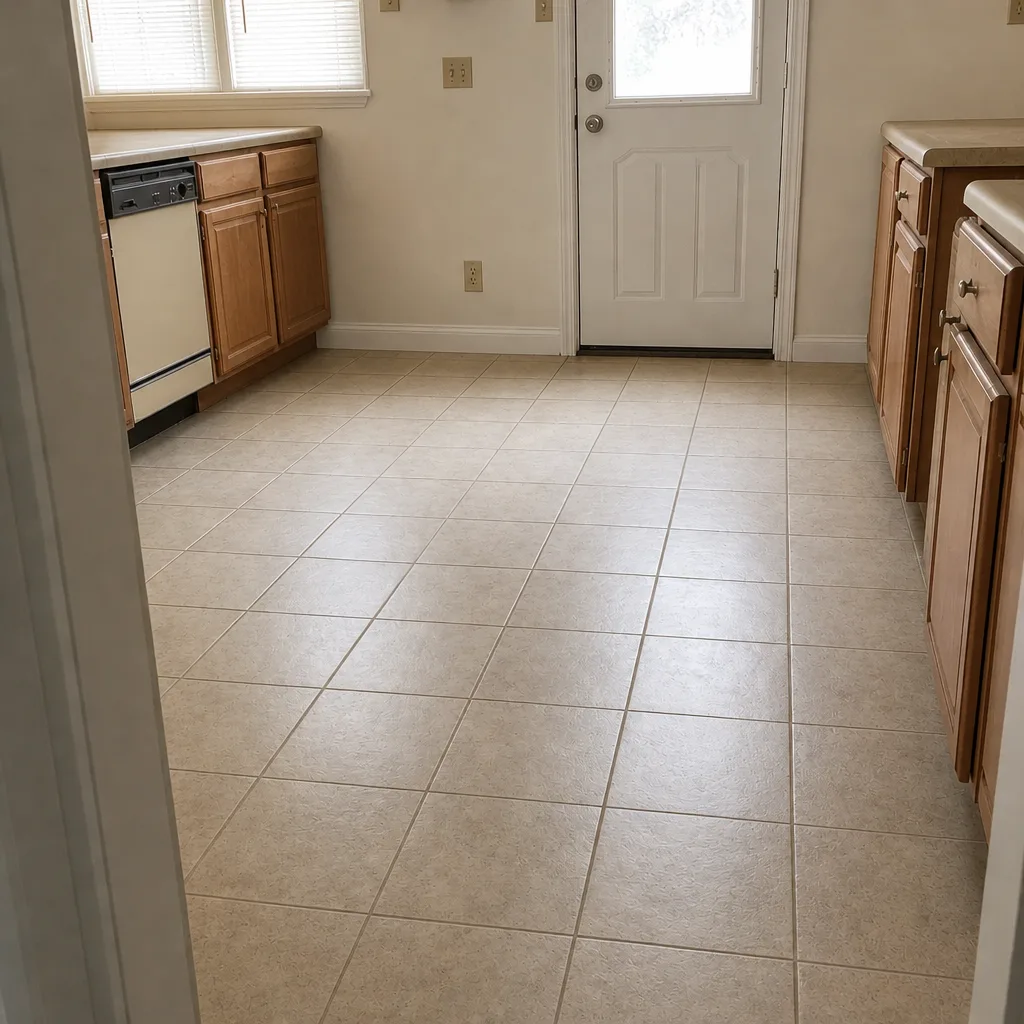 After
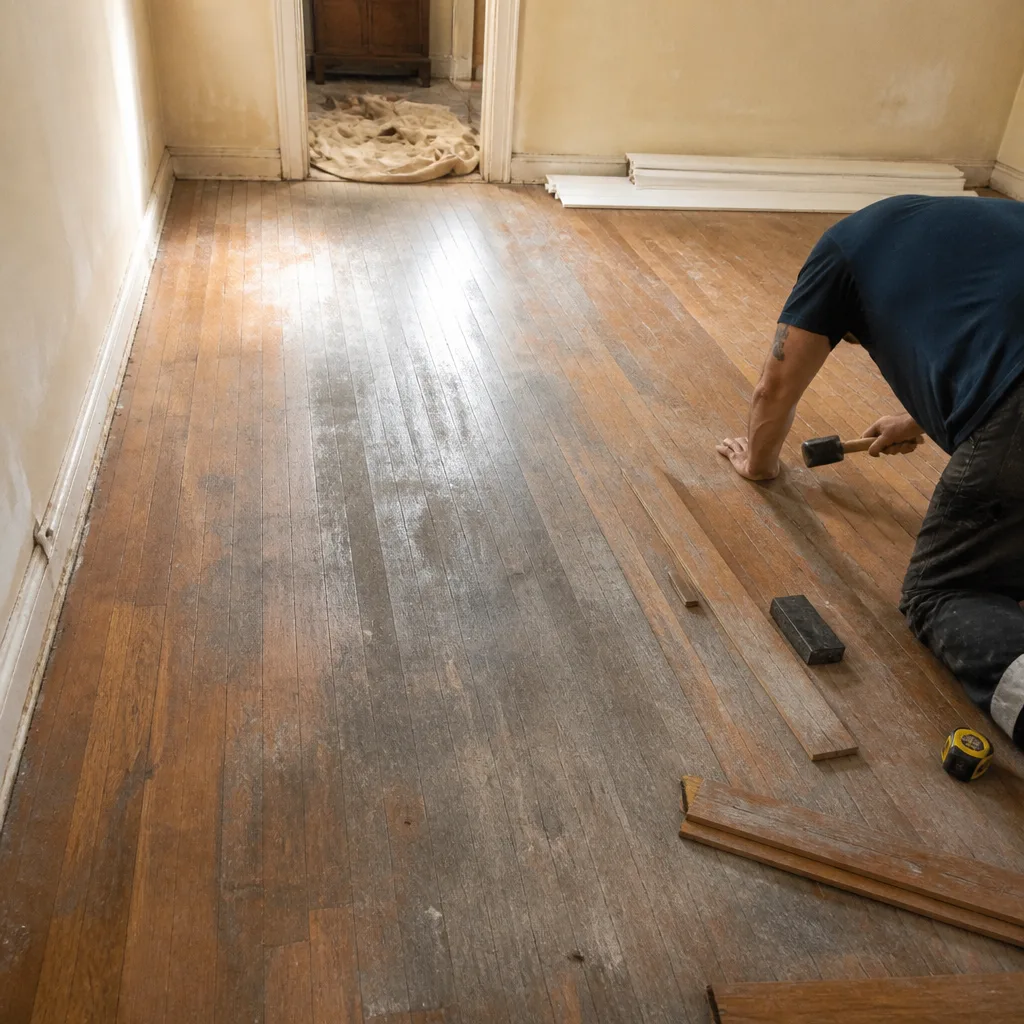 Before
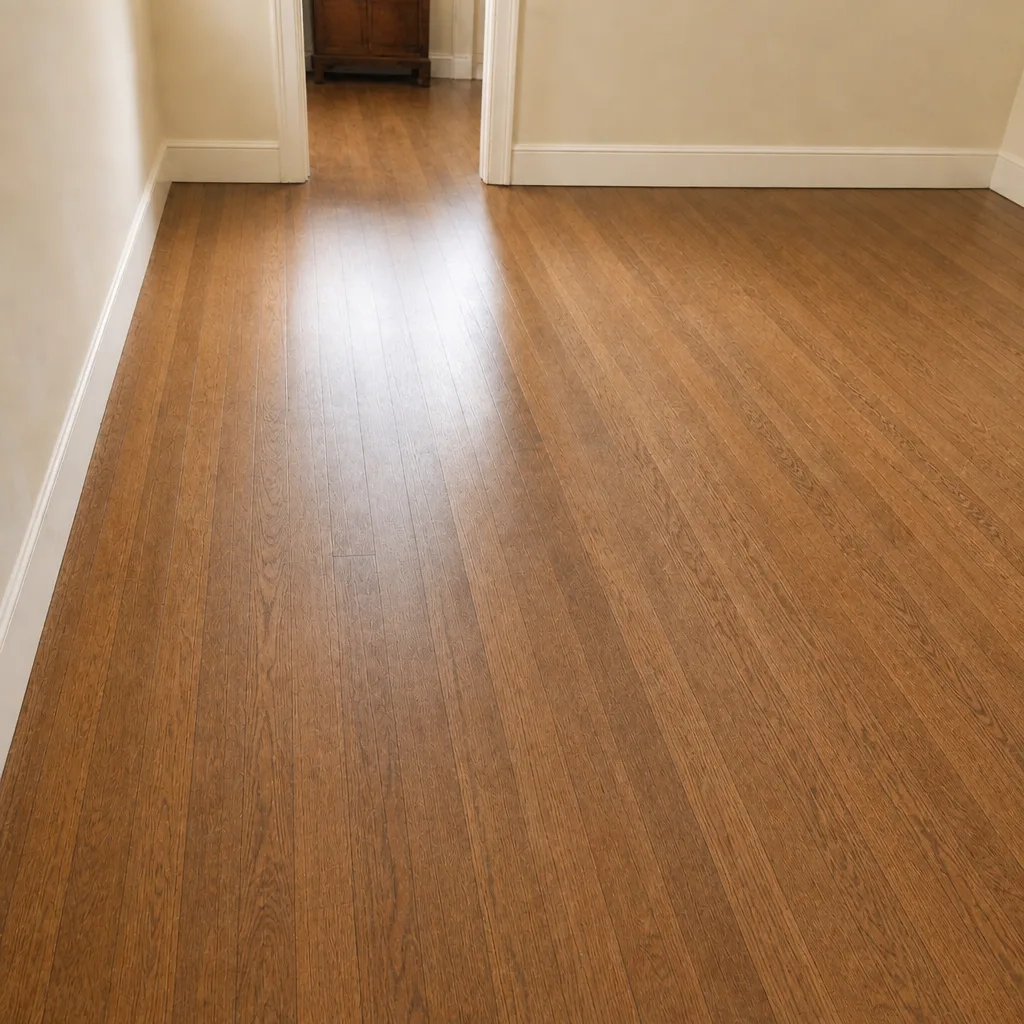 After
When to Call a Professional
Most Mesquite homeowners know when it’s time to call: the floor is lifting at a transition, the laundry room surface has failed, or a whole-home renovation is on the horizon. But there are quieter signs, too. A floor that feels hollow when you walk across it in the great room might have been installed over an improperly prepped slab. A tile floor with cracked grout lines could be telegraphing a substrate issue. A hardwood floor that’s lost its finish can often be refinished rather than torn out. Those situations are all worth a professiona’s eyes. Flooring Mesquite offers free estimates in Mesquite – call (844) 560-4155. We answer 24/7. Fast dispatch from 7am to 7pm, Sunday through Friday.
Frequently Asked Questions
The best flooring depends on the room’s moisture, traffic, and subfloor conditions. Porcelain tile fits kitchens, bathrooms, and laundry rooms. Carpet fits bedrooms. Luxury vinyl plank fits living areas, hallways, and garage entries, with underlayment chosen for slab and radiant heat considerations. Site-finished hardwood refinishing is worth discussing wherever existing wood is in good condition. Call (844) 560-4155 for an exact recommendation on your home – estimates are free.
It’s not automatically a bad idea, but it’s often the wrong specification for at least one room. A single luxury vinyl plank through the whole house is fine in most living areas, but it typically underperforms in laundry rooms and bathrooms where moisture load is much higher. Mixing materials usually makes more sense in a Mesquite home, and it’s still a manageable shopping decision because you’re only choosing two or three categories. We can walk you through the mix at a free estimate – call (844) 560-4155.
Slab foundations affect flooring choice in three ways: slab moisture, slab flatness, and adhesive compatibility over radiant heat. Each manufacturer publishes acceptable readings and product specs for slab installations, and we test and follow those before specifying a product. If your slab doesn’t meet spec, that gets addressed at the estimate, not after install. Call (844) 560-4155 to schedule the estimate – it’s free and it covers the slab check.
The garage-entry transition is the dirtiest, wettest, most abused floor in the house because road grit, desert dust, monsoon-season rain, dragged equipment, and temperature swings all meet in a few square feet. Tile or hard-wearing luxury vinyl plank with a texture that masks grit is the sensible choice there, and the transition strip itself needs to be specified correctly. We check it at every estimate – call (844) 560-4155 to schedule one – and the price is set by the written estimate.
Often, yes, but it depends on the thickness of the wood and its condition, which we check at the estimate visit. Refinishing is a genuinely different service from installation, and it’s a restore-the-floor-you-have option rather than a replacement. If your floor qualifies, refinishing preserves original material and typically avoids the full cost of new install. Call (844) 560-4155 to find out if your floor qualifies – estimates are free.
You can choose from Shaw, Mohawk, COREtec, Pergo, LifeProof, Mannington, Armstrong, Daltile, and Karndean. Those nine brands cover luxury vinyl plank, hardwood, carpet, porcelain and ceramic tile, and laminate, so the price range is set by the brand and product tier you choose, not by the standard of install. You pick the brand. We handle the installation. Call (844) 560-4155 for a free estimate and a walk-through of which brands fit each room in your house.
The Bottom Line
The right flooring decision in a Mesquite home is made one room at a time, using moisture, traffic, subfloor, and acoustics as the deciding factors. Start with the wet rooms – kitchen, baths, laundry, garage entry – and specify the material that’s materially correct. Choose comfort and sound absorption in the dry rooms, especially bedrooms. Mix two or three materials, or run LVP throughout with strategic carpet rooms, whichever fits the budget and the layout. And bring us in to check the slab, the transition zones, and the brand fit before you commit. That’s the sequence that keeps a Mesquite home’s floors looking right a decade from now. Call (844) 560-4155 to schedule your free estimate – estimates are free, and the written price is what sets the job. We answer 24/7. Fast dispatch from 7am to 7pm, Sunday through Friday.
For more on the specific services we offer, see our carpet installation, tile flooring installation, and hardwood refinishing pages. You can also learn more about the areas we serve in Mesquite, and see our full service overview on the Flooring Mesquite homepage.
Written by the team at Flooring Mesquite.