
Last updated November 17, 2026
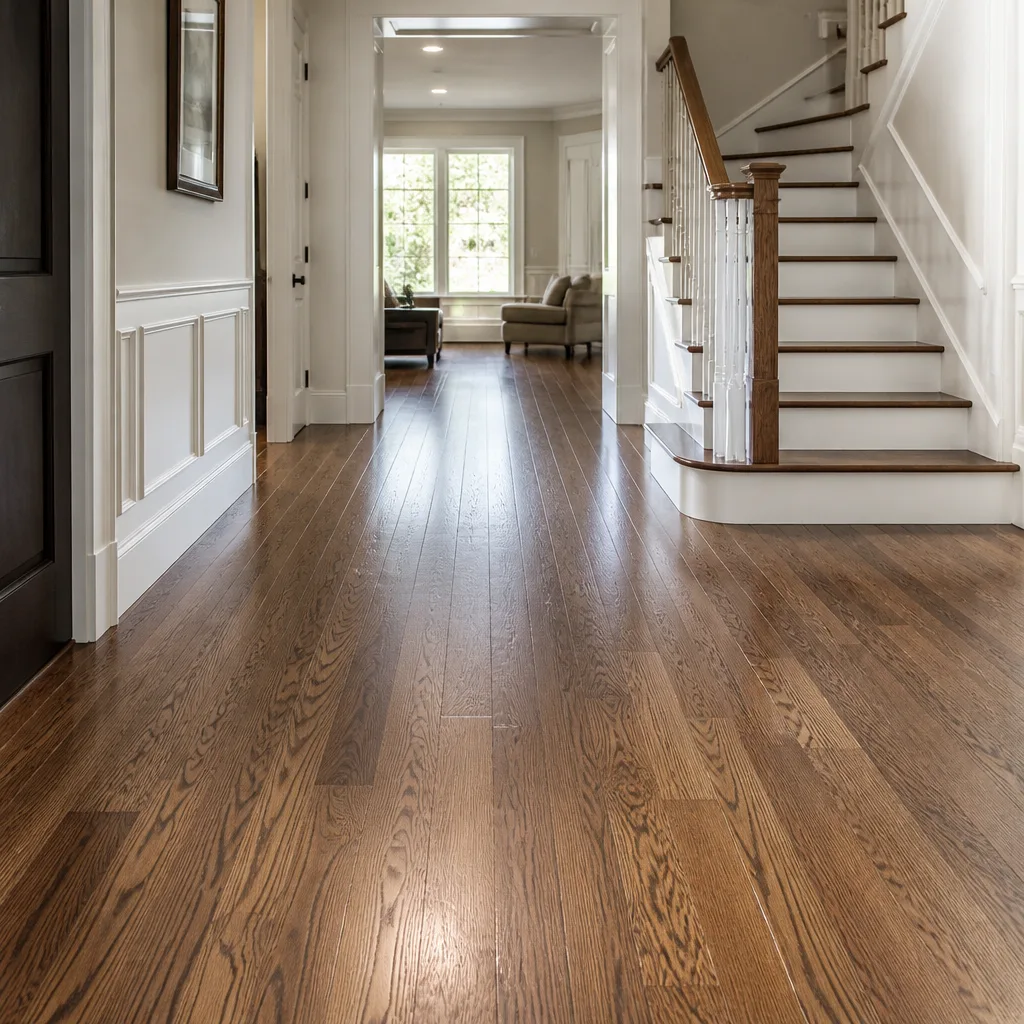 Hardwood
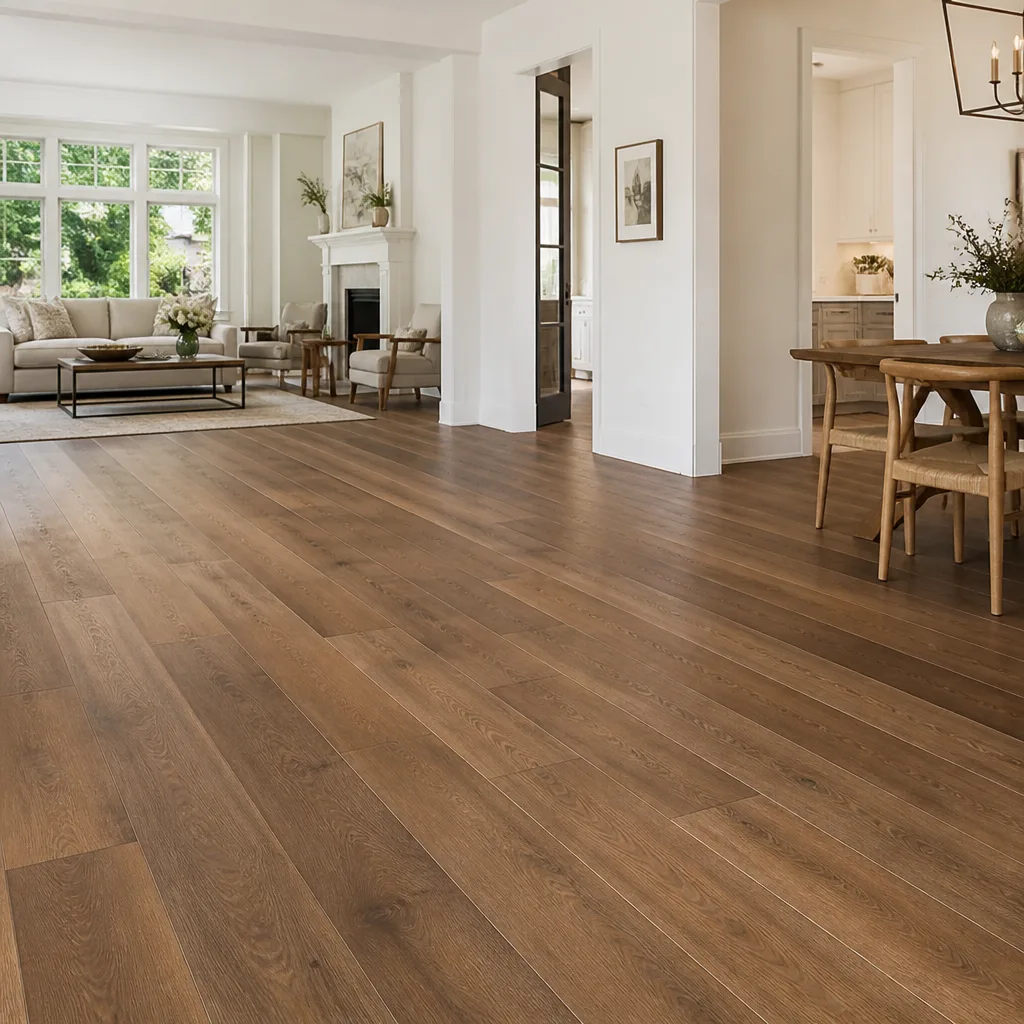 Engineered hardwood
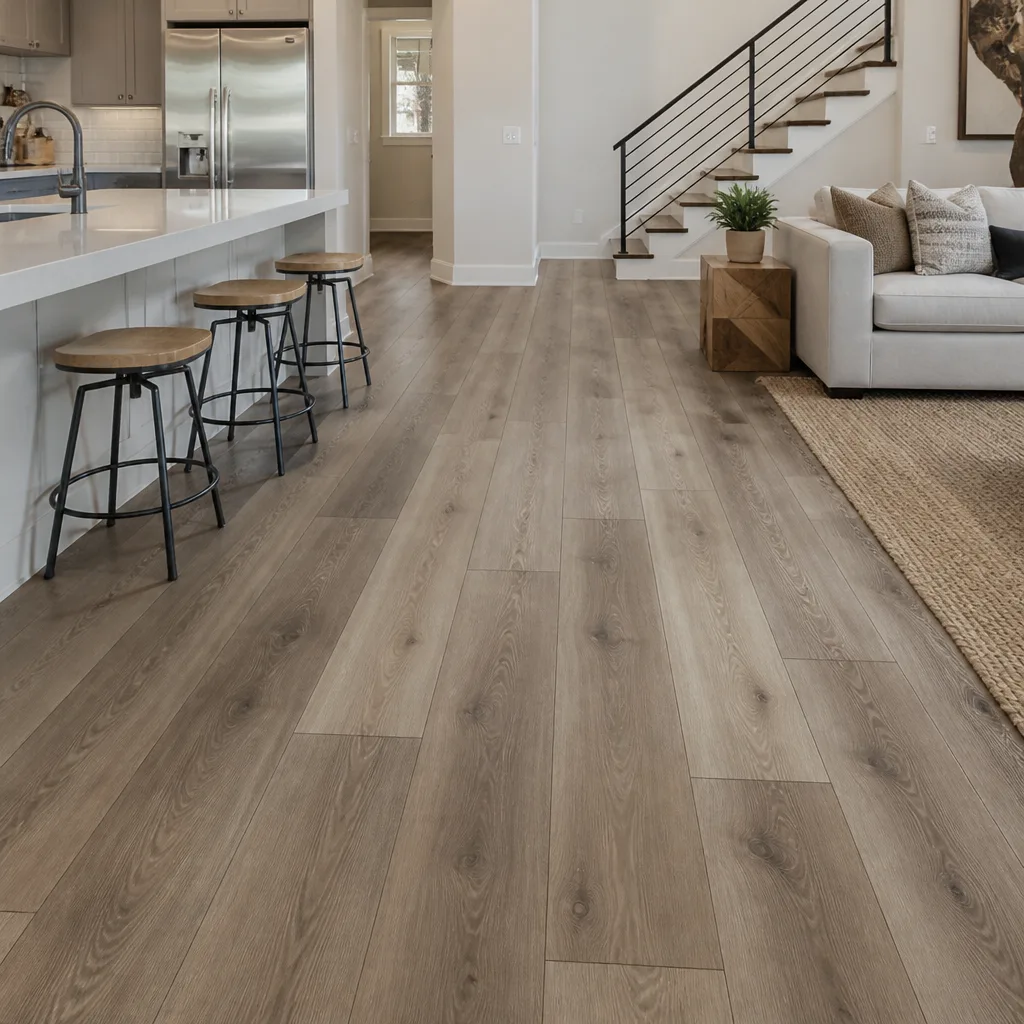 Luxury vinyl plank
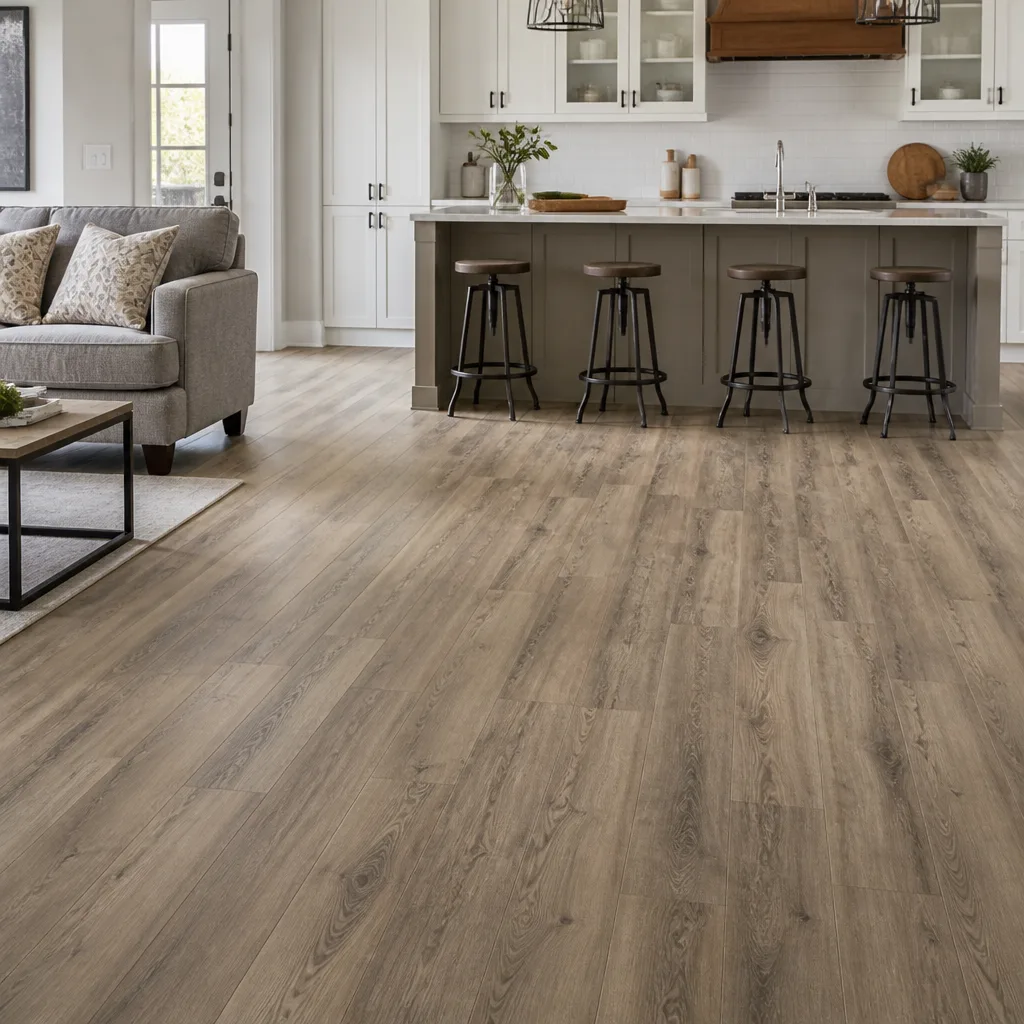 Laminate
 Porcelain tile
 Carpet
 Shaw
 Mohawk
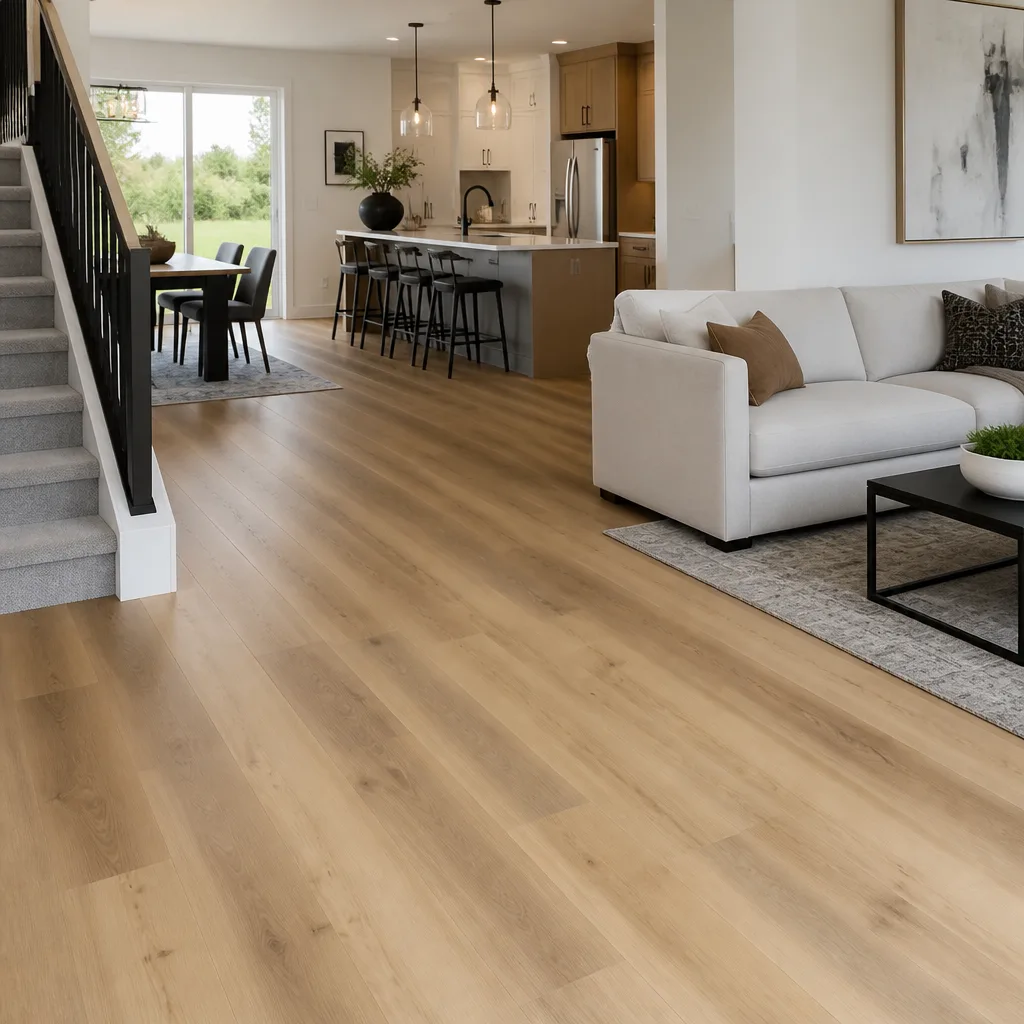 COREtec
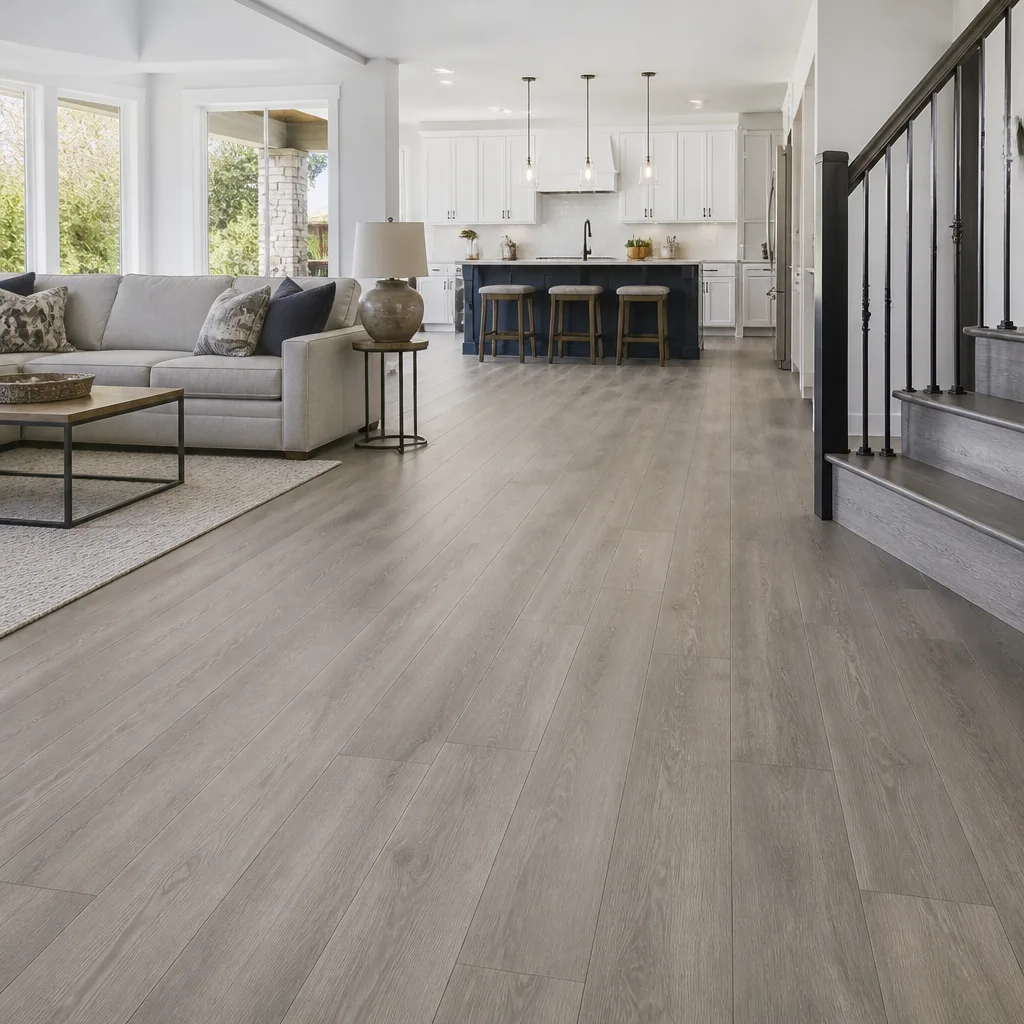 Pergo
Free in-home measure and written estimate: Shaw, Mohawk, COREtec and Pergo lines compared on your own rooms, with carpet, tile, vinyl plank, laminate and hardwood laid out side by side
Get your free estimateHow Mesquite’s Climate Can Affect Your Flooring Choice
Most flooring advice for the Southwest fixates on one thing: moisture. That’s the wrong worry for Mesquite. What actually stresses a floor here is the swing – 110°F afternoons in July and below-freezing nights in January, with summer humidity that can sit near 10% while the afternoon bakes. A luxury vinyl plank marketed as “dimensionally stable” can still gap at the seams or cup at the edges when the product’s expansion allowance was never matched to a range like that. This guide walks through what Mesquite’s climate actually does to carpet, tile, hardwood, and LVP, and how to pick a material that holds up to it.
Quick Answer
The best flooring for a Mesquite home depends on which room and which substrate, but the safest bets for this climate are porcelain tile in wet and high-traffic areas, engineered hardwood over slab-on-grade, and a floating luxury vinyl plank with a wide rated temperature tolerance and a proper expansion gap. Solid hardwood and thin-mil laminate are the highest-risk choices in a home that sees 110°F summers and freezing winter nights. The right answer for your house is set at a free in-home measure, where we check the slab, the sun exposure, and the actual temperature swings room by room.
Styles & brands we work with
- Hardwood
- Engineered hardwood
- Luxury vinyl plank
- Laminate
- Porcelain tile
- Carpet
- Shaw
- Mohawk
- COREtec
- Pergo
Table of Contents
- Why Mesquite’s Thermal Swing Matters More Than Moisture
- Mesquite’s Humidity Range and What It Does to Wood
- Wide-Plank LVP in High Heat and Low Humidity
- Slab-on-Grade and Radiant Heat Absorption
- Which Brands Publish Real Heat and Arid-Climate Specs
- A Mesquite-Specific Acclimation Timeline
- A Room-by-Room Recommendation
- Common Mistakes to Avoid
Why Mesquite’s Thermal Swing Matters More Than Moisture
Mesquite sits in the Virgin River valley at the edge of the Mojave, and the temperature range is the story. A July afternoon regularly tops 110°F. A January night can drop below freezing. That’s a delta of well over 100 degrees across a year, and a much sharper daily swing than most flooring installation guides plan for.
Every flooring material expands and contracts with heat and moisture. The question is how much, and whether the installation method leaves it room to move. A floor that’s been glued tight or set with too small a perimeter gap on a summer day is already in tension when the temperature finally drops in the winter. A floor that’s been installed in a cold, empty house and then heated into summer has the opposite problem – the material needs to grow and there’s nowhere for it to go.
Moisture matters too, of course. But in a Mesquite home, moisture usually arrives from a specific source: a plumbing leak, a slow toilet seal, or irrigation on the wrong side of the slab. Humidity itself in the air here rarely reaches the level where a properly installed floor fails. Heat and thermal movement cause more of the failures we see during free-estimate visits in Mesquite than ambient humidity does.
What Thermal Movement Actually Looks Like
- Gapping – plank or board edges open up as material contracts in the cool season.
- Cupping – edges of a board lift, often where the material has absorbed moisture unevenly.
- Crowning – the center of the board rises, typically a sign of moisture from below.
- Peaking – planks or tiles lift at the seams, usually from insufficient expansion room.
- Delamination – the top wear layer separates from the core, a real risk for thin LVP in high heat.
None of these are mysterious when you know what caused them. They’re mechanical responses to a material not having enough room or the right structure for the range it lives in.
Mesquite’s Humidity Range and What It Does to Wood
Summer relative humidity in Mesquite often runs between 10% and 20%, with the shoulder months higher and winter a bit damper. For wood floors, that’s a meaningful spread. Wood is hygroscopic: it takes on moisture from the air and gives it back, swelling and shrinking as it does.
Solid hardwood is the material most exposed to that swing. It’s one piece of wood from top to bottom, with no cross-lamination to fight the movement, so it needs generous expansion gaps and a stable indoor environment to stay flat. In a Mesquite home with the AC running hard all summer and a heater running in winter, the indoor humidity can swing enough that solid hardwood starts to gap at the plank edges by February.
Engineered hardwood is built differently: a real wood top layer bonded to a plywood or high-density core, with the grain in the core running crosswise to the top. That cross-lamination limits how much the whole board can move with humidity. Over a slab-on-grade in Mesquite, engineered is the more forgiving choice of the two, and it’s often the one we’d recommend for a sun-facing living room.
Solid vs. Engineered: A Quick Comparison
- Solid hardwood – thickest wear layer, refinishable many times, moves the most with humidity, needs a stable subfloor and generous expansion gaps.
- Engineered hardwood – real wood top layer over a cross-laminated core, more dimensionally stable, works better over concrete, refinishable depending on the top layer’s thickness.
Either material can work in Mesquite, but the acclimation window and the moisture assessment are stricter for solid wood. The written estimate is where both get spelled out for your specific home, and nobody should hand you an install date before that visit.
Wide-Plank LVP in High Heat and Low Humidity
Luxury vinyl plank is the category where Mesquite’s heat shows up in ways most buyers don’t expect. The wider the plank, the more movement it has to accommodate across its width. A nine-inch or twelve-inch plank is a beautiful thing visually, but in a room that swings from 110°F in summer to below-freezing in winter, wide planks need a wider expansion gap at every wall and doorway than a narrow plank of the same product would.
Where it goes wrong is at the delamination line. Cheap or thin-core LVP has a wear layer bonded to a core that can separate when it’s repeatedly heated and cooled past its rated tolerance. The result is a plank whose surface looks cracked or cloudy near a window or in a room that gets the full afternoon sun. The fix is never a repair; it’s replacement of the affected planks, and that’s an avoidable outcome when the product is specified correctly at the start.
There’s also a common misreading of “waterproof.” Many LVP products are water-resistant in the sense that the surface won’t be damaged by a spill, but water underneath the floor – from a slab, a leak, or a slow appliance drip – still has to be dealt with. LVP is not a substitute for fixing a moisture source.
What to Look for in LVP for Mesquite
- A published temperature range on the product’s technical data – not just “all-climate” on the box.
- A core thick enough that the wear layer won’t separate under repeated heating.
- A floating installation with the manufacturer’s specified expansion gap at every vertical surface.
- Heat management at south- and west-facing windows, where afternoon sun hits the floor directly.
If you’re already comparing brands, COREtec and Karndean both publish technical data worth reading closely. You pick the brand. We handle the installation, and we’ll tell you at the free measure if a particular plank width is asking too much of a Mesquite room.
Slab-on-Grade and Radiant Heat Absorption
Most Mesquite homes are built on slab-on-grade, which means the floor you walk on is bonded or floated over concrete that touches the ground. That slab does two things: it draws heat out of a room in winter and, on a sunny day, it can radiate heat back up in the summer. For flooring, that means the substrate directly affects how a material performs.
Adhesive-down installations over slab have one set of risks – the adhesive has to tolerate the slab’s moisture and the temperature swing. Floating installations have another – the plank or board moves as a single unit and needs a perimeter gap that reflects the room’s full range, not just the day of install. In a room with a big south-facing window, the floor directly under that window can get much hotter than the thermostat reading suggests.
Before any installation over a Mesquite slab, we check moisture from the concrete and any cracks or movement in the slab. Neither can be papered over with underlayment. If the slab’s damp or moving, that’s a fix before any flooring goes down.
Slab Considerations at a Free Measure
- Test the slab for moisture and inspect for cracks or heaved sections.
- Note how much direct sun the room gets, and where it hits the floor.
- Check whether there’s a radiant heat system or in-slab plumbing that limits adhesive or fastener options.
- Measure the actual expansion room needed at every wall, doorway, and cabinet toe kick.
- Confirm the transition heights between rooms and any exterior doorways.
Which Brands Publish Real Heat and Arid-Climate Specs
One of the most useful things to do before you choose flooring is to read what the manufacturer actually publishes about the product’s performance, not what the sales display says. Some brands publish technical data sheets that list the working temperature range, the substrate requirements, and the expansion allowance. Others lean on vague “all-climate” marketing language that doesn’t tell you much.
What we look for in a technical data sheet is specific: rated temperature range for installation and in-service use, the plank or board width, the recommended gap, the substrate requirements, and the minimum substrate flatness. A brand that publishes those numbers is giving you something to work with. A brand that only says “works anywhere” is asking you to trust them, and in a Mesquite home that’s not enough.
Among the brands we source, Daltile’s porcelain tile data is detailed and easy to read, and porcelain is inherently tolerant of heat. COREtec and Karndean both publish usable technical data on their LVP lines. Shaw and Mohawk are broad portfolios that include products designed for different climates; the specific product line matters more than the brand label. Pergo, Armstrong, LifeProof, and Mannington round out the portfolio, and each has products worth a closer look depending on the room.
We install and service the floor you choose, from that range of nine brands. If you already have a brand name in mind, bring it to the free estimate and we’ll check the spec sheet against the room.
A Mesquite-Specific Acclimation Timeline
The generic “72-hour acclimation” advice you’ll find on most flooring guides is not a good fit for Mesquite. In a climate that swings as widely as this one, acclimation has to reflect the season, the room, and the material. The goal isn’t a set number of days – it’s to get the material in equilibrium with the room it’s going to live in before any of it gets cut or fastened.
Here’s how we think about it, room by room. These are the steps we walk through with the homeowner at the estimate, and the schedule is set at that visit.
Acclimation Steps for a Mesquite Install
- Get the room to its real service conditions. Heat, AC, and a dehumidifier or humidifier running as they will be when you live there.
- Open the cartons in the room where the flooring will be installed. Not the garage, not the truck, not a hallway.
- Stack them loosely to allow airflow around the boards. Manufacturer instructions set the exact stacking method.
- Check the room’s humidity through the acclimation period. A simple hygrometer from the hardware store gives you a real reading.
- Verify the material has reached room conditions before installing. The product instructions set the exact target, and the installer confirms this at the start of the job.
- Install with the season in mind. A floor installed at the peak of summer needs to plan for how much the material will contract in winter, and vice versa.
Rough Season-by-Season Notes
- Summer installs (June-August): expect fast acclimation and be extra careful about expansion gaps – the material is at its most expanded state.
- Fall installs (September-November): generally the most forgiving window, when the indoor and outdoor ranges are closest.
- Winter installs (December-February): the room is at its driest and the material at its most contracted. The install needs to allow for summer expansion.
- Spring installs (March-May): a good window, but watch for the first heat spike.
None of that replaces the product’s own instructions or the written estimate, which set the actual acclimation window and install schedule for your floor.
A Room-by-Room Recommendation
No single floor is the right answer for every room in a Mesquite house. The same home that wants warm, quiet carpet in the bedrooms will want porcelain tile in the bathrooms and kitchen, and something dimensionally stable in the sun-baked living room. Here’s how the disciplines map onto a typical Mesquite home.
Living and Dining Rooms
These rooms see the most afternoon sun and the biggest daily temperature swing. A floating LVP with a wide rated tolerance, or engineered hardwood with a real wood top layer over a stable core, both work well here. The material has room to move and the core limits how much it wants to.
Kitchen
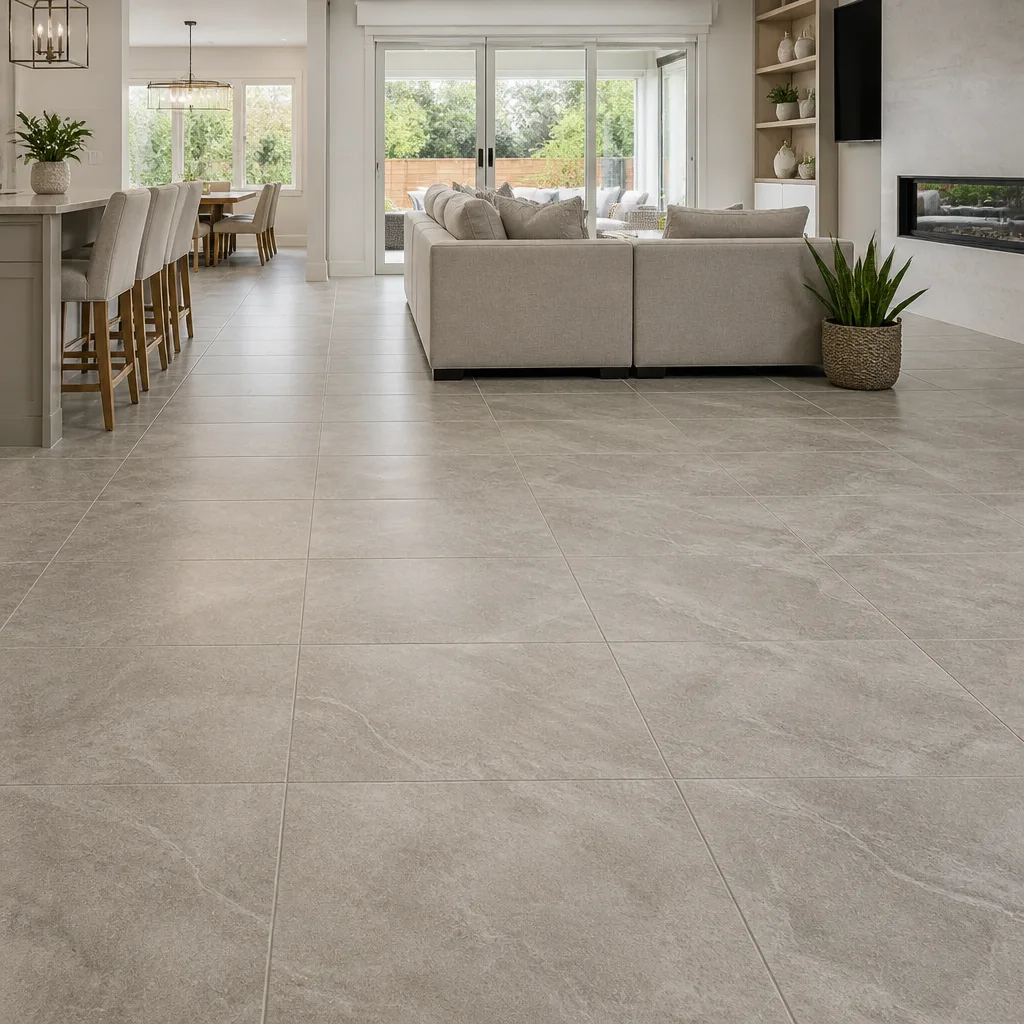
Spills, dropped pans, and a lot of traffic. Porcelain tile from tile flooring installation is the most forgiving choice – a compatible tile with the right grout handles heat, water, and traffic with very little complaint. A mid-range LVP is the second-best option and easier underfoot.
Bedrooms
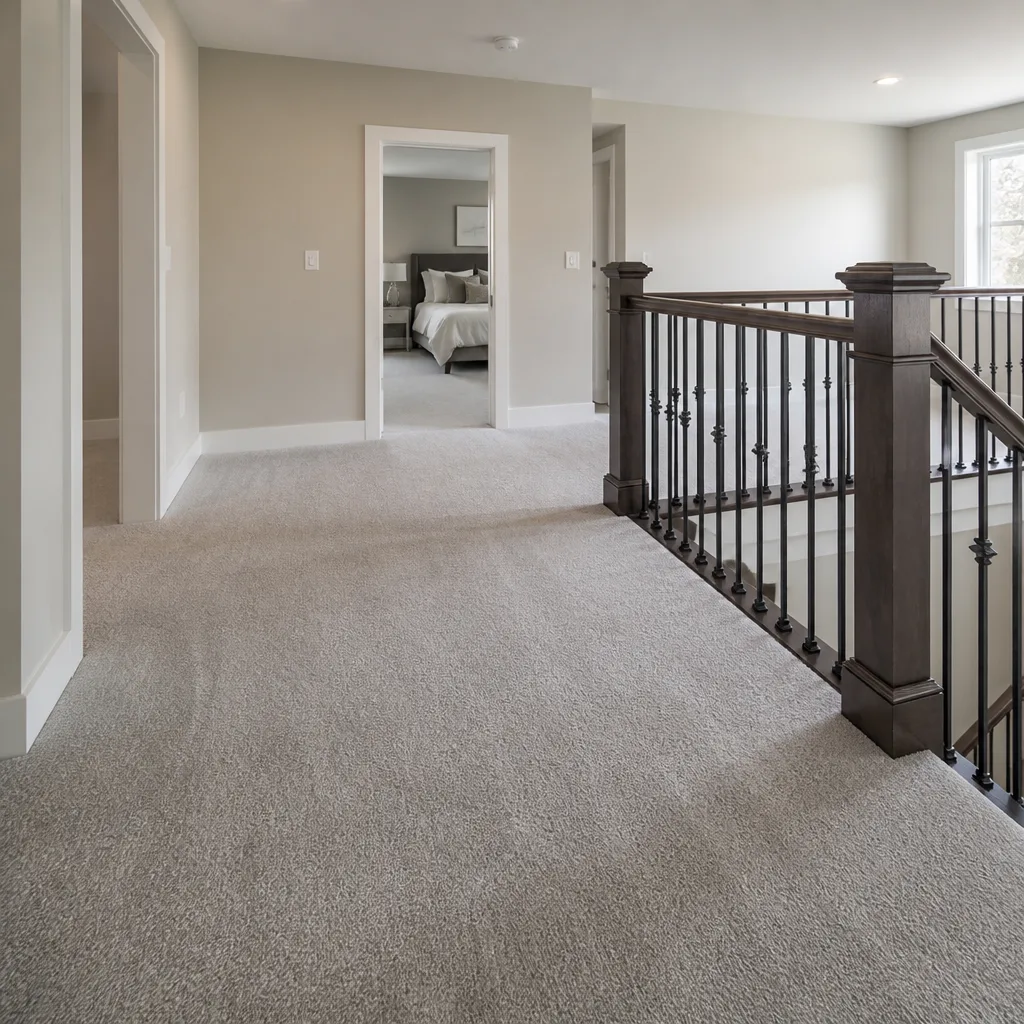
This is where carpet installation earns its place. Carpet is quieter underfoot, warmer in the winter, and less affected by the slab’s temperature swing than a hard surface. A mid-weight, stain-resistant carpet over a good pad is the standard recommendation for a Mesquite bedroom.
Bathrooms
Porcelain or ceramic tile, full stop. Water on the floor is inevitable and the heat swing is irrelevant when the material is ceramic.
Sunroom or West-Facing Additions
The room that gets the worst of the afternoon sun needs the tightest spec. A porcelain tile or a carefully selected LVP with a documented temperature tolerance and a generous expansion gap.
Whole-Home Renovation
When the whole house is being re-floored at once, the conversation is really about transitions, radiant heat if it exists, and which single material can cross the most room boundaries without needing a strip at every door. That’s a conversation we’d rather have in person than over the phone.
Common Mistakes to Avoid
- Buying wide-plank LVP without checking the temperature rating. Wide planks look great but need a wider expansion gap than narrow ones. In a Mesquite room with a 100-degree annual swing, the spec sheet matters more than the showroom photo.
- Acclimating the floor in the garage. A garage in Mesquite in July can be hotter than the inside of the house. The material needs to sit in the actual room, at the room’s actual conditions, before it goes down.
- Assuming “waterproof” means you can skip the slab check. Water under the floor is a problem for every material, including LVP and tile. If there’s moisture coming up through the slab, fix that first.
- Choosing solid hardwood over a slab-on-grade without a real moisture assessment. Solid wood is the material most exposed to a Mesquite humidity swing. It can work, but the subfloor and the gap have to be right.
- Ignoring sun exposure in a west-facing room. The floor directly under a west window gets much hotter than the thermostat says. That’s where a heat-sensitive material fails first, and it’s where a fireplace or hot pipe nearby matters too.
- Setting a budget before seeing what the room needs. The right product for one room may not be the right product for another. Starting with the room and working to the price gives you a better floor than starting with the price and hoping.
- Skipping the technical data sheet. If the product data only says “all-climate,” that’s not a spec – that’s marketing. The spec sheet lists the numbers that tell you whether it belongs in your Mesa View or Highland Hills home.
See the difference
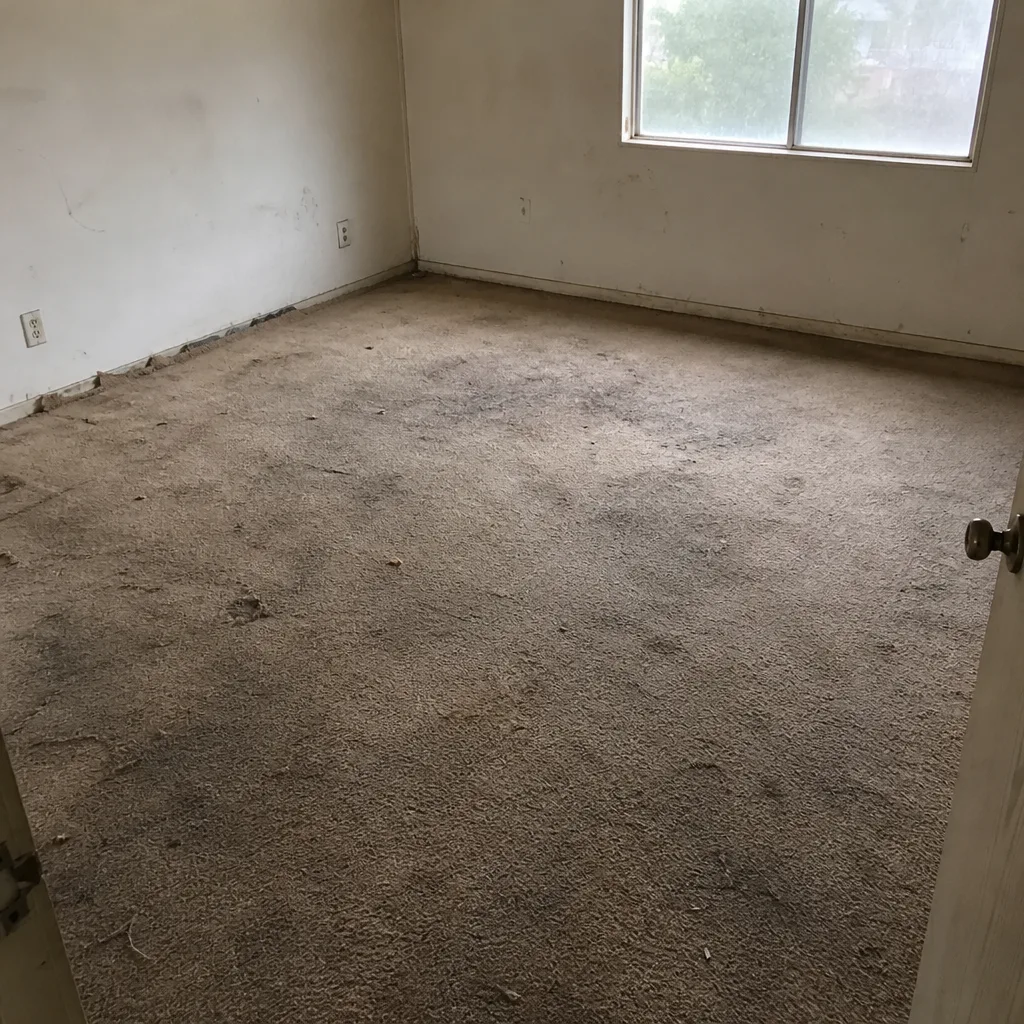 Before
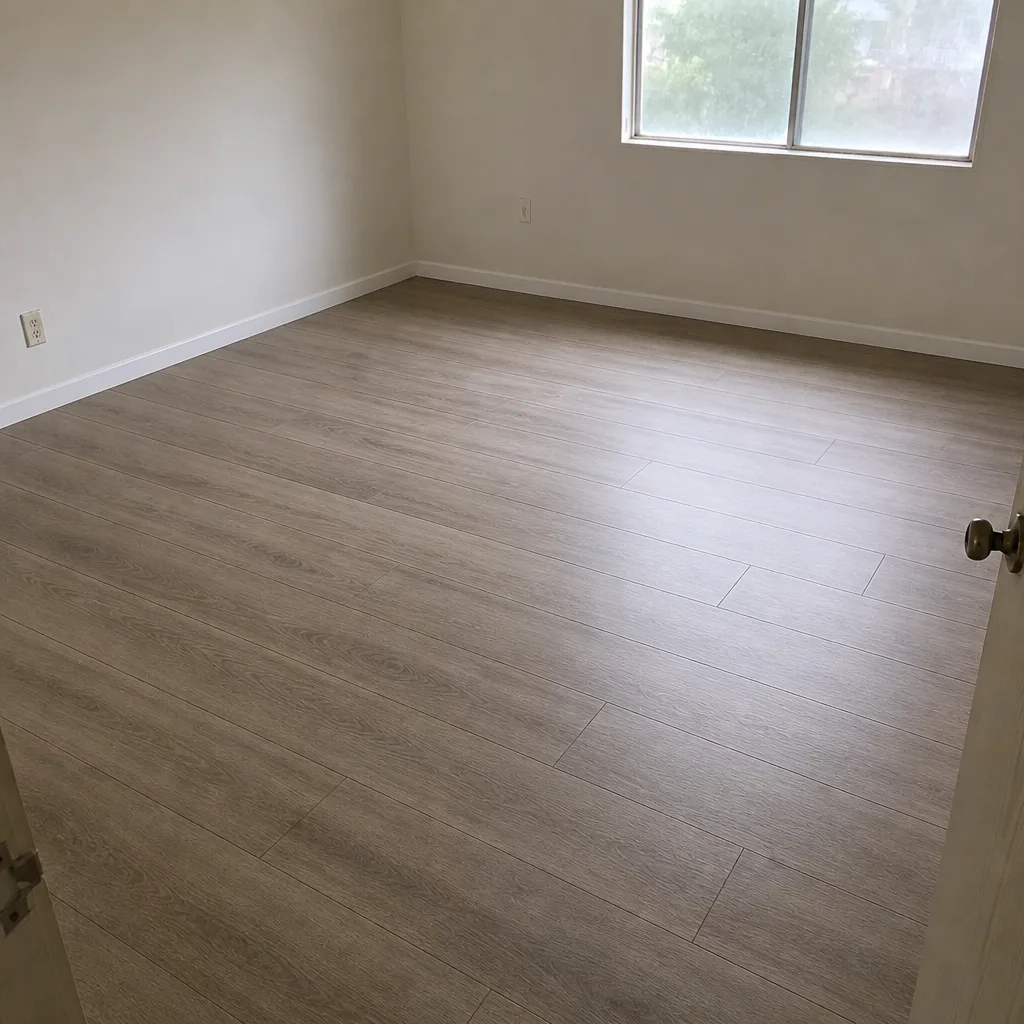 After
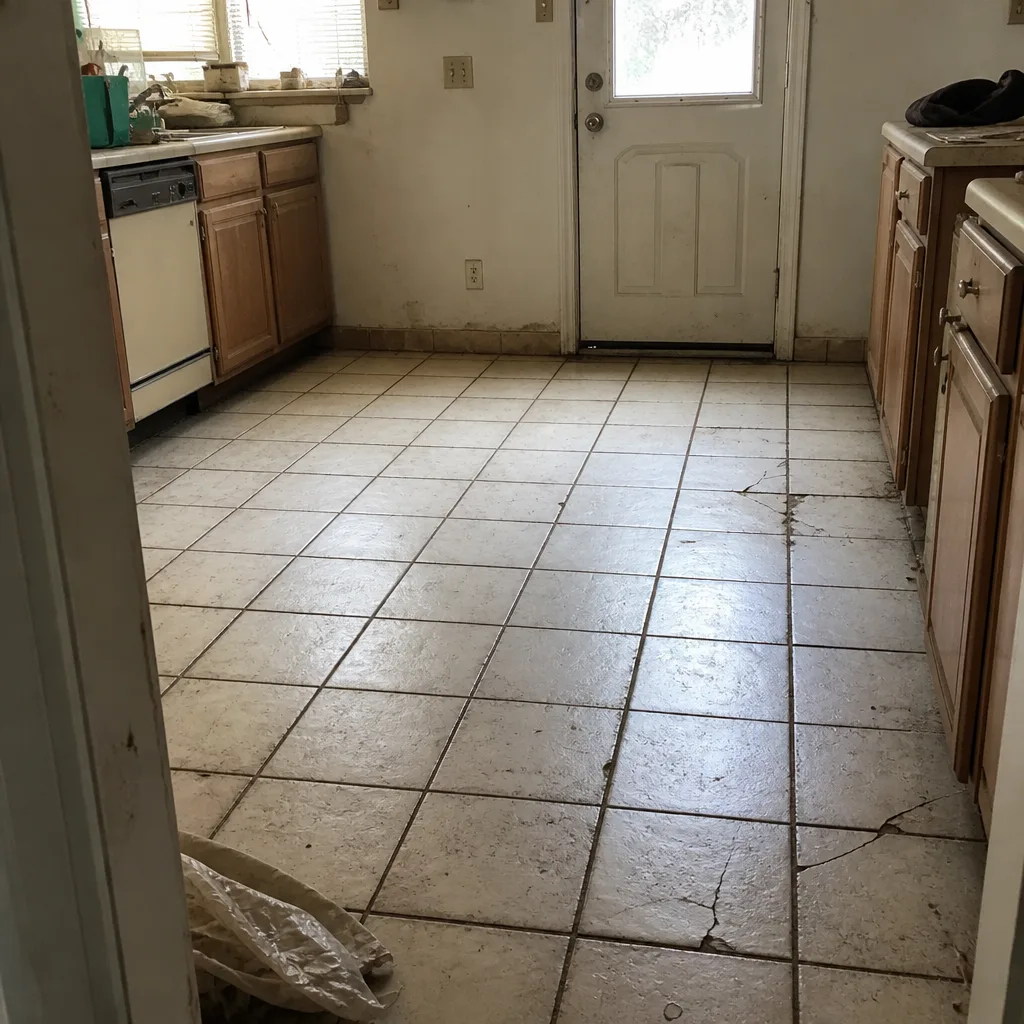 Before
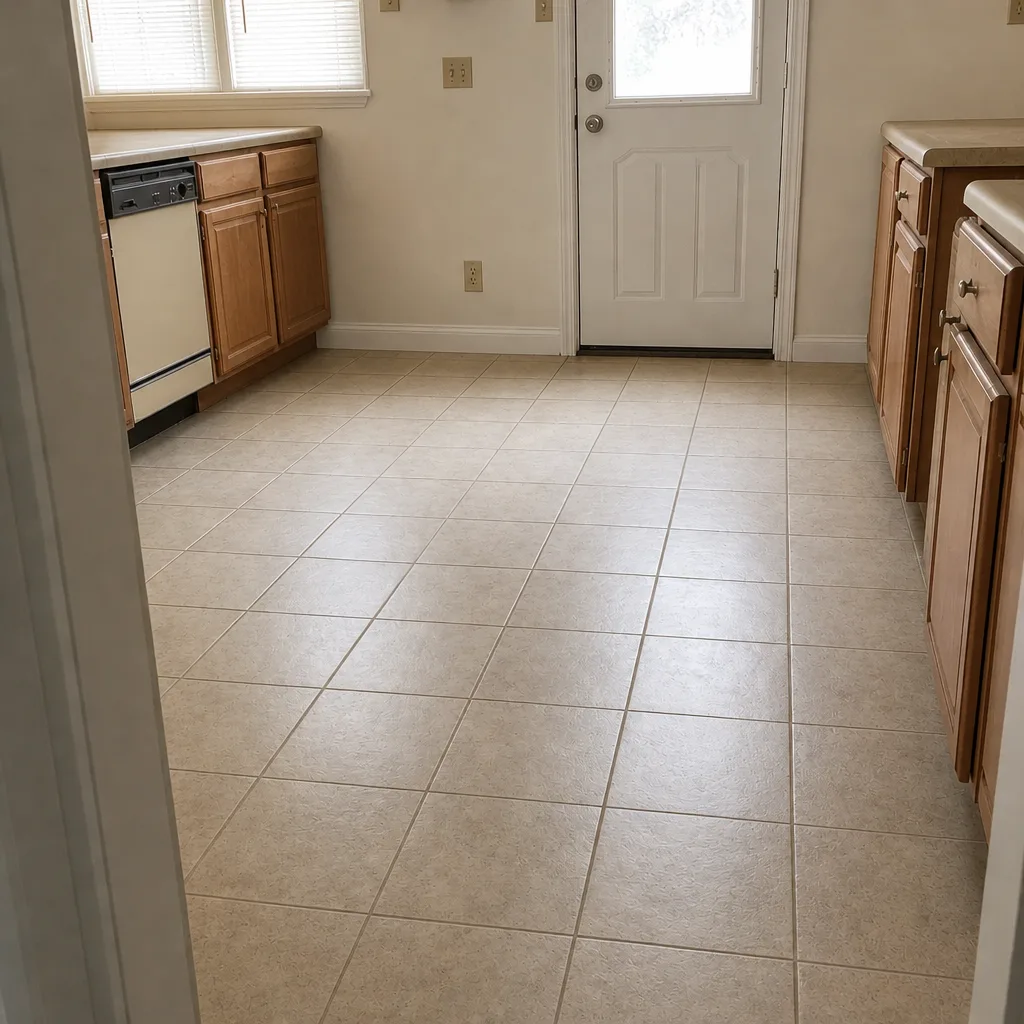 After
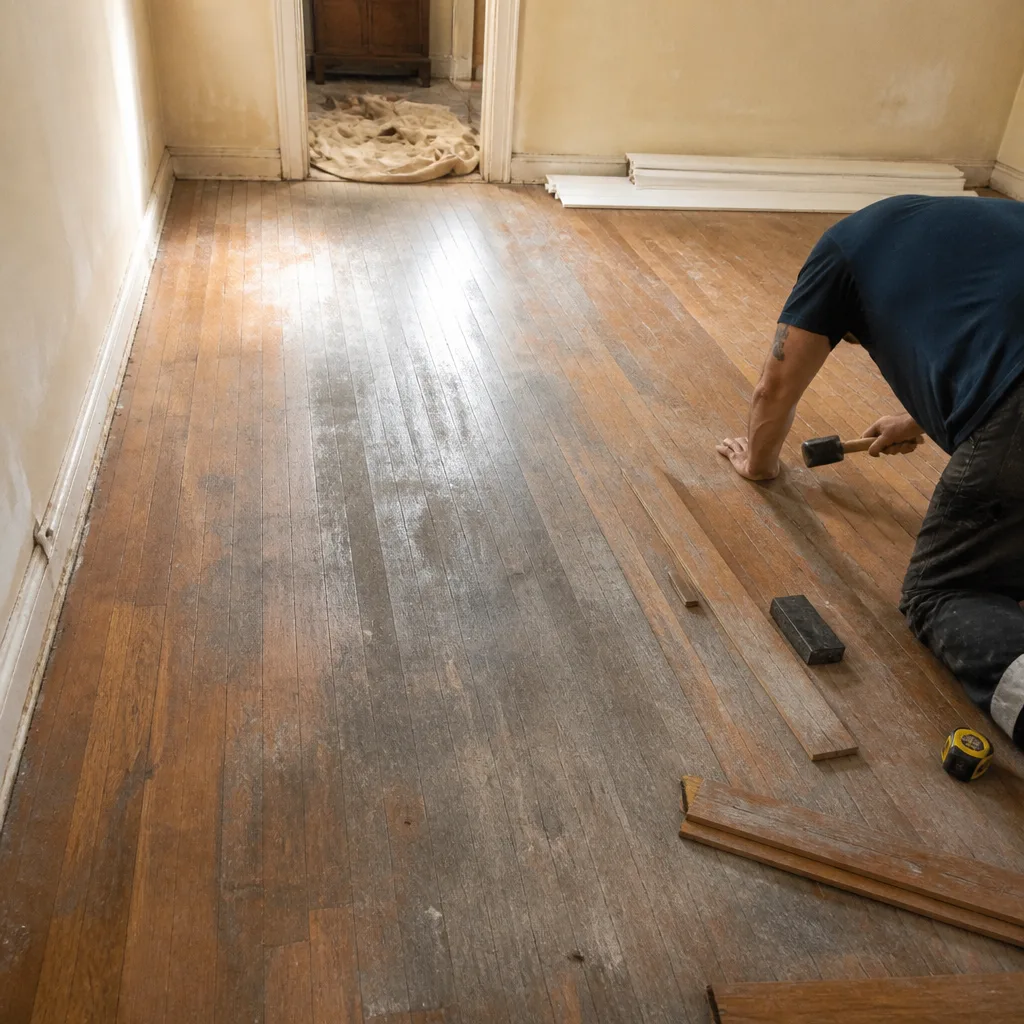 Before
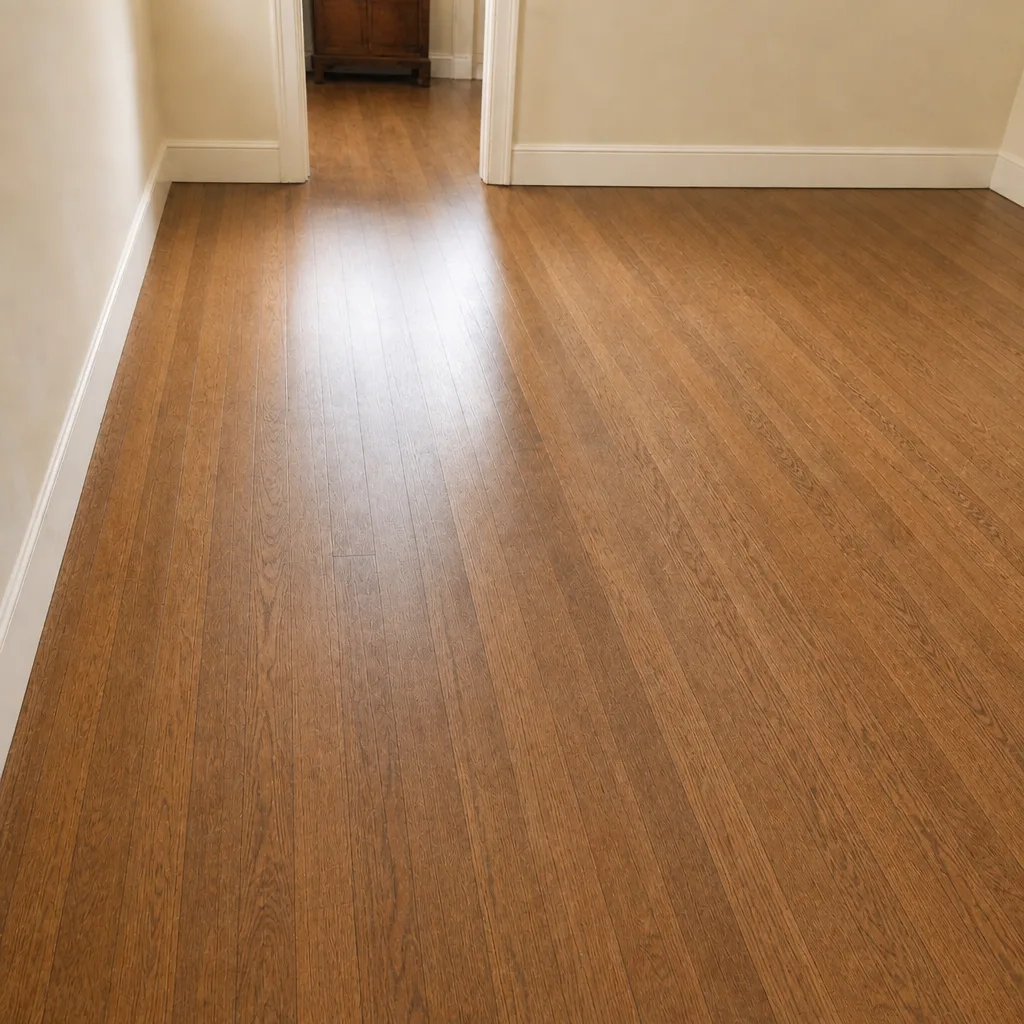 After
When to Call a Professional
Some flooring work is genuinely DIY-friendly. Replacing a threshold or setting a single tile is fine. But when the floor is glued, floated, or fastened over a slab in a Mesquite home that swings from 110°F to below freezing, the details that make the difference – substrate flatness, slab moisture, expansion gaps in every direction, acclimation timing, transition heights – are all things a trained eye catches and a first-timer misses. That’s especially true for carpet stretching and seaming, for setting tile over a slab with movement, and for refinishing a hardwood floor where the thickness of the top layer and the condition of the wood decide whether the job is even possible. If you’re unsure whether your floor can be refinished, or whether a LVP product will hold up in a west-facing room, that’s the conversation to have before you buy the material.
Flooring Mesquite offers free estimates in Mesquite – call (844) 560-4155 to schedule yours. Our technicians have up to 12 years of experience. We answer 24/7, and fast dispatch runs 7am to 7pm, Sunday through Friday.
Frequently Asked Questions
Porcelain tile, engineered hardwood over slab, and a well-specified floating LVP are the most climate-tolerant choices for a Mesquite home, with carpet still a strong pick for bedrooms. Solid hardwood and thin-mil laminate are the highest-risk materials given the annual temperature swing. The right choice depends on the room, the subfloor, and the sun exposure, which is what the free measure covers.
It can, but the cause is almost never the heat alone – it’s a plank without enough expansion room, or a thin-core product that isn’t rated for the temperature range. Wide-plank LVP in a room that hits 110°F in summer and freezing in winter needs a wider gap at every wall and doorway than a narrow plank would. The product’s technical data sheet is where that number lives.
Summer humidity here often runs 10-20%, which is dry enough that humidity failures are less common than heat and thermal movement failures. Wood floors still respond to the indoor range your AC and heater create, which is why engineered hardwood is usually more forgiving than solid over a slab. Moisture problems usually arrive from a leak or from below, not from the air.
It depends on the material and the season, which is why the generic 72-hour figure isn’t reliable here. Summer installs acclimate faster; winter installs need to allow for summer expansion. The product instructions and the written estimate set the actual acclimation window, and the schedule is set at the estimate.
Often yes, but not always. It depends on the thickness of the wood above the tongue and the condition of the surface. We offer hardwood floor refinishing as a standalone service specifically because restoring the floor you already have is a real option that full replacement isn’t the only answer to. The free estimate is where we check the thickness and give you a straight answer.
We source and install from nine brands: Shaw, Mohawk, COREtec, Pergo, LifeProof, Mannington, Armstrong, Daltile, and Karndean. That range spans luxury vinyl plank, engineered hardwood, carpet, porcelain and ceramic tile, and laminate, so the conversation can start with the room and the budget rather than a single product line. You pick the brand. We handle the installation.
The Bottom Line
Mesquite’s climate is a wide temperature range first and a dry climate second, and that ordering matters for flooring. Materials that tolerate heat and thermal movement do well here; materials that depend on a stable environment are harder to keep flat. Porcelain tile and engineered hardwood over a slab are the most forgiving choices, floating LVP with a real temperature spec is next, and solid hardwood needs a careful assessment before it goes down. The brand matters, but the spec sheet matters more. The right floor for your home is set at a free in-home measure, with a written estimate and a booked install day. Call (844) 560-4155 to schedule yours, and browse the full range of Flooring Mesquite and the neighborhoods we serve in Mesquite.
Written by the team at Flooring Mesquite.